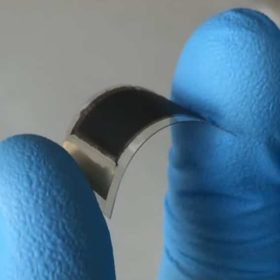
Perovskite stability, and the effects of defects
An international team of scientists fabricated perovskite solar cells which retained almost all of their initial 21% efficiency after 1,000 hours under continuous operation at their maximum power point. The researchers credit this performance to their discovery of an additive that served to ‘block’ ions that cause device degradation, and also hope their work will contribute to an improved understanding of the relationship between efficiency and stability in perovskite PV.
Nano-micro-scale cooler for solar modules
The proposed technique is based on radiative cooling and consists of a glass coating made with a two-dimensional subwavelength nanostructured grating, which is imprinted in soda-lime glass and has enhanced mid-infrared emissivity, and a micro-structured grating. The temperature decrease provided by the nano-micro-grating coating was found to be approximately up to 5.8 degrees Celsius.
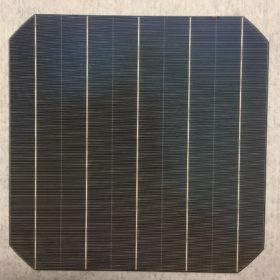
Bifacial n-type TOPCon cell with 22.6% efficiency
The device also showed an open-circuit voltage of 702 mV, a short-circuit current of 40 mA/cm2, and a fill factor of 79.7%. It has a large area of 239 cm².
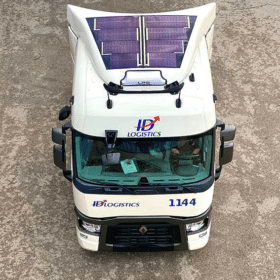
Flexible PV fabric for heavy transport
France’s Solar Cloth has announced that Renault Trucks has listed it as a supplier for its factories.
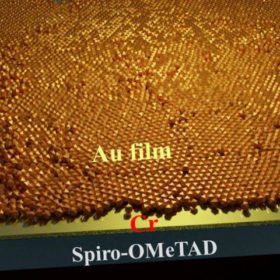
A touch of gold for a 19.8% efficient perovskite cell
Scientists in the U.S. fabricated a semitransparent perovskite solar cell that reached 19.8%, and 28.3% in a tandem cell stacked on top of a silicon-heterojunction device. The device relies on a film of gold just a few atoms thick, grown using an innovative seeding method, which has the valuable properties of being both highly conductive and transparent.
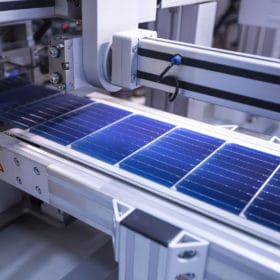
Longi achieves 25.21% efficiency for TOPCon solar cell
The Chinese module manufacturer said the result was confirmed by the Institute for Solar Energy Research in Hamelin, Germany.
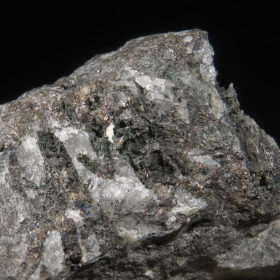
Flexible bifacial kesterite solar cell at 9.3% efficiency
Scientists in China developed a new kesterite solar cell they say could be suitable for indoor or outdoor applications. The bifacial solar cell reached 9.3% frontside efficiency, and also achieved a 9.0% on the backside.
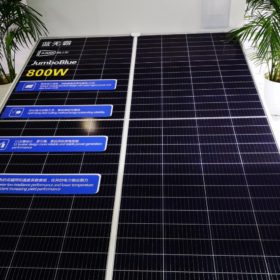
Chinese PV Industry Brief: Another massive polysilicon order, Tongwei starts operations at 30 GW cell factory
GCL-Poly will provide JA Solar with 148,000 metric tons of polysilicon over the next five years. Tongwei produced its first 210mm PERC cell at its Jintang factory.
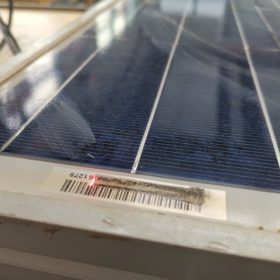
New factory in Spain to produce and repair solar modules
The 50 MW facility is located in the region of Navarra and is operated by German specialist Rinovasol. The company buys, fixes and certifies the panels and puts them back on the market, with a new datasheet and a five-year warranty.
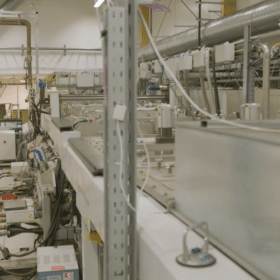
Swedish perovskite startup picks up new investment
Norway based renewables investor Magnora has increased its stake in startup equipment supplier Evolar, which is aiming to bring a production line for perovskite solar cells to market. Magnora will now hold a 40.7% stake in the company as part of a long-term deal between the two, with options to further increase the stake available down the line.
