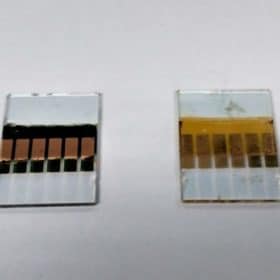
Solid-state solar cells based on metal-organic framework nanomaterials
Spanish scientists have fabricated solid-state PV cells with two different porous nanomaterials. Although low in terms of efficiency, one of the cells built with the MIL-125(Ti) metal-organic framework nanomaterial exhibited better photovoltaic performance than similar devices.

Silicon carbide passivating contact for 24%-efficient crystalline solar cells
The special passivating contact is claimed to feature high transparency, good conductivity, and at the same time, to offer enough hydrogenation for passivation. The cell built with this contact achieved an open-circuit voltage of 725 mV, a short-circuit current density of 40.87 mA cm−2, and a fill factor of 80.9%. Its certified efficiency was 23.99%.
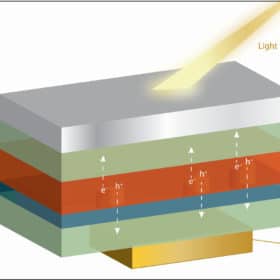
Doping and capping promise perovskite stability
Scientists demonstrated two new approaches to improving the stability of perovskite solar cells. By both incorporating rubidium into the structure of the perovskite, and adding a film of two-dimensional perovskite as a capping layer, they were able to demonstrate a significant reduction in the cell’s sensitivity to moisture. The group says its research will open up new routes to improved performance and stability in perovskite PV.
Vortex generators and glass texturing for solar module cooling
New research from Australia has shown that vortex generators and glass texturing have so far proved to be the most effective solutions among the novel methods explored for lowering the temperature of solar panels.
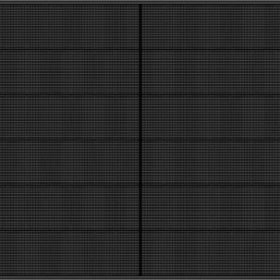
REC launches 405 W black solar module with gapless design
The new heterojunction panel series features an efficiency of up to 21.9 % and an operating temperature coefficient of -0.26% per degree Celsius.
African solar installers feel the pinch of rising panel prices
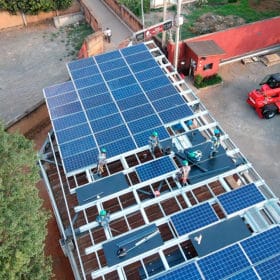
With Chinese manufacturers having warned they will pass on escalating component costs, and shipping expenses soaring since last summer, the rising price of solar is forcing some installers to redraft quotes, pv magazine has discovered.
Higher performance with bigger modules a ‘no brainer’
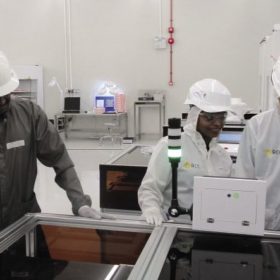
Jan Bicker, who replaced Steve O’Neil as the CEO of REC on March 1, says that one of his top priorities is the ongoing development of the company’s Alpha PV modules. REC plans to unveil new, more powerful panels soon, and will make a final decision on a new factory in France in June.
Fraunhofer ISE achieves 35.9% efficiency for III-V triple-junction solar cell based on silicon
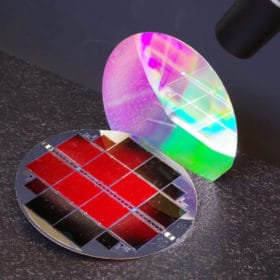
The cell, which looks externally like a device with a two-terminal architecture, was built with III-V semiconductor layers that were connected to the silicon sub-cell on the atomic level. The cell may be used in electrically powered aircraft and drones.

Chinese PV Industry Brief: More polysilicon and glass deals, new wafer capacity comes online
JA Solar has agreed to buy 75,000 MT of polysilicon from Qinghai-based Asia Silicon (Qinghai) Co., Ltd., and Longi will buy 250 million square meters of PV glass from US-based Chinese manufacturer Deli Glass. Huantai Group commissioned another furnace at its 12 GW wafer factory in Inner Mongolia.

Hevel Solar unveils 22.3%-efficient heterojunction BIPV module
The new panel has a nominal power of 395 W and a claimed temperature coefficient of 0.28% degrees Celsius.
