
Hanwha Q Cells unveils 495 W solar panel with 21.4% efficiency
The Q.Peak Duo XL-G10.3 panel is currently the largest and most powerful product manufactured by the South Korean module maker. It is based on 156 monocrystalline ‘Q.antum’ half cells and is the company’s first panel relying on M6 wafers.

CEA-Ines achieves 19.2% efficiency for flexible perovskite solar cell
The cell was fabricated with a flexible substrate made of indium tin oxide (ITO) and polyethylene terephthalate (PET). The device was tested through a damp heat test and showed it can retain around 90% of its initial efficiency after 800 hours.
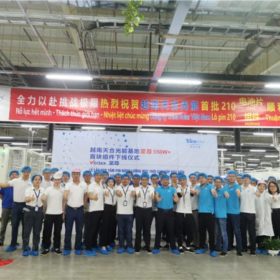
Trina Solar begins production of 550 W modules at Vietnam facility
Trina Solar broke ground on its Thai Nguyen plant in December, and completed construction in five months.

Global solar supply chain under scrutiny
The discussion about the extent to which forced labor exists in the solar value chain continues. A video, a university report, a ministerial response and a parliamentary machinations formed notable developments of the debate last week.

Solar module factory to resume production in Portugal
An investment of around €5 million will allow an old solar panel factory in the Beja district to reopen and create more than 40 new jobs. Galp Energia’s former director of innovation is part of the new team.
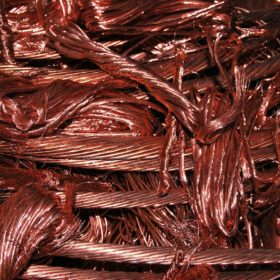
IEA highlights solar’s dependence on Chinese copper processing
The sheer volume of new power lines which will be required to accommodate the rising tide of solar installations ensures copper has been included by the International Energy Agency on its list of minerals which must keep flowing if the energy transition is to stay on course. And it’s not production that’s the potential bottleneck.
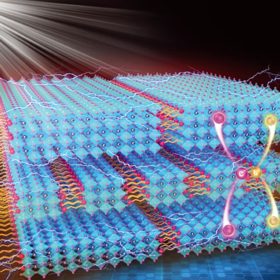
Sandwich structure of quasi-2D perovskite film nourishes next-gen solar development
Even as solar researchers strive to squeeze every drop of efficiency from the industry-ruling silicon solar-cell technology, scientists are constantly questing for the next, cheaper, more efficient way of harvesting the sun’s energy to power human endeavours. The appetite for accelerating 2D perovskite solar cell development has just been piqued!
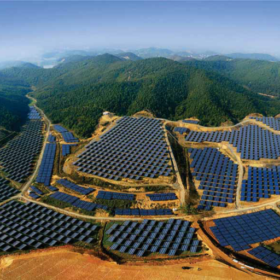
Chinese PV Industry Brief: New budget for residential PV, financials for Daqo, Canadian Solar
China’s National Energy Administration (NEA) has allocated some $77 million for residential PV incentives. This should be enough to deploy another 1 GW of rooftop PV.

Next2Sun unveils bifacial photovoltaic fence
The solar fence has an output of 400 W per fence section. It is built with heterojunction or n-type PERT bifacial cells developed by the German start-up and relies on its vertical mounting technology for bifacial photovoltaic panels.
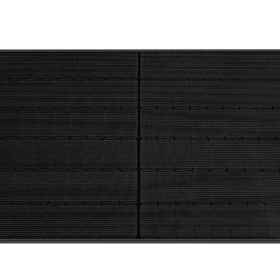
Panasonic launches 380 W heterojunction solar module compatible with its Evervolt battery
The new module series has a power output ranging from 370 to 380 W, a temperature coefficient of -0.26% per degree Celsius, and an efficiency of up to 21.7%.
