
A different angle on perovskite defects
Scientists in China took a closer look at the role of defects in limiting the performance of perovskite solar cells, demonstrating a screening effect that could be tuned to make material defects “invisible” to charge carriers, greatly improving cell performance. Using this approach they demonstrate a 22% efficient inverted perovskite solar cell, and theorize several new pathways to even higher performance.

GCL nears resolution of its $500m senior notes headache
The Chinese poly maker expects to sign off a debt reorganization plan in Bermuda next month and has announced its latest $102 million solar project sell-off.

Floating structure design for offshore PV
Researchers at the Norwegian institute Sintef are testing a special floating structure that Equinor wants to deploy in offshore waters. The structure is built with an anchoring system that is claimed to give the installation enough freedom to cope with the waves.
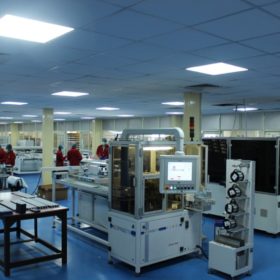
India’s Gautam Solar doubles capacity with new production line
Gautam Mohanka, managing director of New Delhi-headquartered Gautam Solar, told pv magazine its Haridwar module factory, now scaled up to 250 MW, is producing panels with a power output of up to 400 W, using mono PERC and polycrystalline cells.
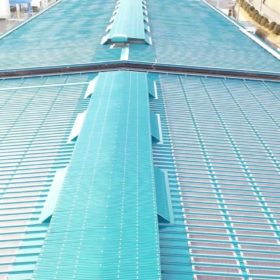
Off-grid rooftop solar with metal-wrap-through solar modules
Chinese MWT solar module manufacturer Sunport has provided its S1 product for a solar-plus-storage commercial rooftop PV project in Japan. The array is linked to 165 kWh of storage and is equipped with flexible solar panels that weigh 1.3kg each.

Solar pavement for historic square in Barcelona
The municipal government of Barcelona is supporting the development of a 50-square-meter pilot project to test the feasibility of PV-paving tech.
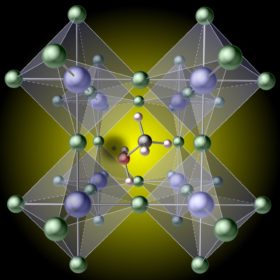
Keeping track of hydrogen for perovskite performance
Scientists in the United States discovered that hydrogen plays a leading role in the formation of defects in a perovskite film, which limit their performance as PV devices. The discovery, according to the researchers, offers further insight into observations already established by trial and error and could help to push the impressive efficiency achievements already made by perovskites even higher.

SEIA releases tool aimed at increasing solar supply chain transparency
The document is written to have “universal application” across product lines intended for export to the U.S. market, and is expected to be adopted by equipment manufacturers and U.S. importers.
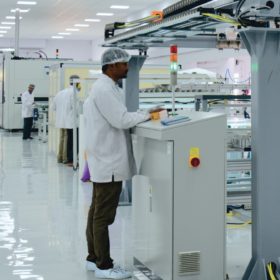
Indian government outlines rules for production-linked incentive scheme
PV manufacturers seeking Indian state funding for new production lines will need to meet minimum scale and module-efficiency requirements, according to new government guidelines.
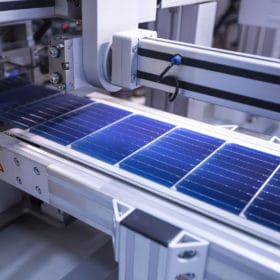
ITRPV: Large formats are here to stay
The 2021 edition of the International Technology Roadmap for Photovoltaics (ITRPV) was published today by German engineering association VDMA. The report, which forecasts technology trends across the solar industry, expects PERC to maintain its position as the dominant cell technology and notes that large wafer formats are here to stay.
