Climate change to reduce solar radiation in hot, arid regions
A new Princeton University study shows that PV plants in hot, arid parts of the world, such as the Middle East and the U.S. Southwest, will be particularly affected by climate change.
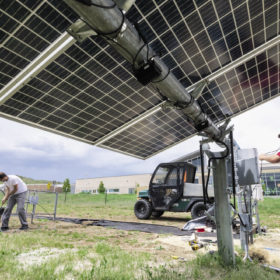
Trump pulls tariff exemption for bifacial panels – again
The U.S. president issued a proclamation on Oct. 10 that cites the impact of imported bifacial panels on U.S. solar manufacturing, while also raising the scheduled fourth-year tariff rate from 15% to 18%.

Checkerboard solar cell design for improved light diffraction
A U.K.-Portuguese research group is proposing a new solar cell design based on diffraction gratings – optical components that split and diffract light into several beams. They claim this could lead to a 125% improvement in light trapping.
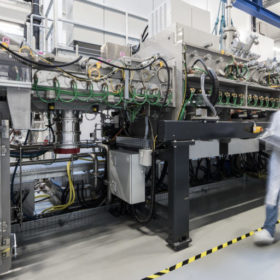
CIGS cells could hit efficiencies of 33%, say Germany scientists
Researchers have gradually improved the efficiency of CIGS thin-film tech in recent years. But scientists in Germany say the 23% rate achieved thus far is not the end of the story.

Not all solar panels are equal, says Ultra Low-Carbon Solar Alliance
As the world accelerates toward decreasing carbon emissions, so too should the solar industry’s supply chain. This was the idea that has led to the establishment of the Ultra Low-Carbon Solar Alliance this week.
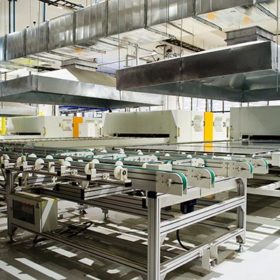
India could have 20 GW more PV manufacturing capacity
Indian Minister of Power RK Singh has revealed interest from manufacturers in developing more production lines, even before newly planned incentive schemes are taken into account.

South Korea to introduce new rules for PV recycling
The South Korean authorities plan to introduce new rules for PV waste recycling in 2023. Several recycling facilities are already being built, including one by the government, with a combined capacity of 9,700 tons.
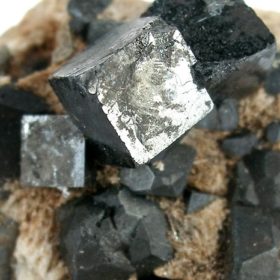
Bifacial perovskite solar cells may become more eco friendly than crystalline ones
A US study has suggested the raised energy yield of bifacial perovskite devices effectively means they could have a lower environmental impact than conventional crystalline cells. The researchers considered single-junction cells with high and low bandgaps and similar, multi-junction devices with two and four-terminal structures.
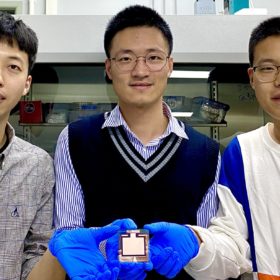
Additive allows all-perovskite tandems to hit 24.2% efficiency
Scientists led by China’s Nanjing University discovered that a chemical commonly used for bleaching in the textile industry can also serve as a performance-boosting additive to mixed lead/tin perovskite thin films. Using this additive, they were ultimately able to fabricate a two perovskite tandem cell measuring 1.05cm² that achieved 24.2% efficiency.

Gallium arsenide phosphide tandem solar cell with 25.0% efficiency
The demonstrated device, according to the academics, is built with interfaces between the active cell layers that improve the top cell carrier collection. The cell was built with texturing and a hydrogenated amorphous silicon (a-Si:H) passivation of a silicon back surface.
