Modeling the potential of lead-free perovskites
Scientists in India modeled the performance of tin-based perovskite (methylammonium tin triiodide) finding that with careful optimizations the material could achieve efficiencies beyond 28%.

Indian manufacturer to open 750 MW solar fab by April
Solar manufacturer Premier Energies is setting up a factory in Telangana with an annual cell and module production capacity of 750 MW. The fab will be equipped to produce large-format panels with wafer sizes up to 210mm.
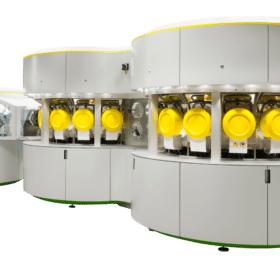
Midsummer ships CIGS production line to Russia
The production equipment was bought by Russian nanotechnology specialist Rusnano. The line will be used to produce BIPV modules at a factory in the Republic of Mordovia.

Nice Solar Energy files for insolvency under self-administration
The CIGS thin-film specialist employs 160 people in Germany. Business operations will continue with no disruption for the time being.
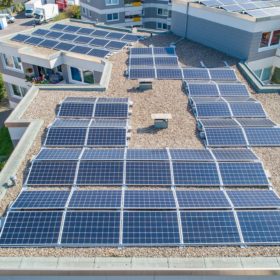
Brazil’s PV module demand reached almost 5 GW in 2020
According to a recent report from Brazilian consultancy Greener, the country imported 4.76 GW last year. Domestic PV module makers had a 3.8% market share with around 190 MW in shipped modules. The analyst also revealed that prices for distributed generation PV systems rose by 20% in 2020.
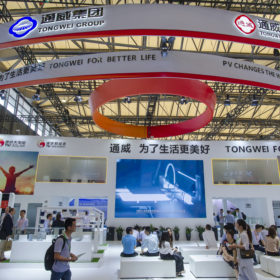
Tongwei and Jinko plan more wafer and poly production
The two solar companies have signed a strategic agreement to jointly finance new manufacturing facilities, Tongwei announced this morning.

From power to energy rating, for a better choice of PV module
A new report published by the International Energy Agency’s Photovoltaic Power Systems Program (IEA PVPS) outlines the need for PV module standards and testing to focus on ‘energy rating’ – an estimate of actual performance in a variety of climate conditions, rather than nominal power output or efficiency. The report finds that the IEC and other standards bodies are already beginning to make encouraging moves in this direction, but more work, and more data, are needed to make the most out of this approach.

GCL-Poly dilutes holding in developer business to raise funds
The poly maker yesterday secured approval from unpaid creditors to restructure the company’s debts and will commit the anticipated $115 million windfall from its shares placement towards its financial commitments.

India eyes 10 GW of ingot-to-module manufacturing capacity within two years
Under a production-linked incentive scheme, the government will reward manufacturers for building vertically integrated PV production lines. The scheme aims to attract 10 GW of production capacity by April 2023.
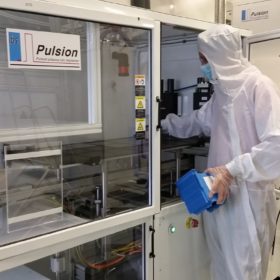
Indium-free passivated solar cell with 22.4% efficiency
French research institute Liten has built the device with a new cell architecture that combines ultra-thin polycrystalline silicon layers with films of passivated transparent conductive oxide (TCO) contacts.
