
Testing CPM-based passive cooling for CPV systems
An international research team has tested change material heat sinks for heat management on a concentrator photovoltaic system. It found that increasing over height ratios lowers the formation of stratified liquid layers, which in turn reduces the potential hot spots in the upper part of the solar cell.
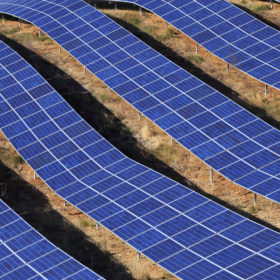
Brazil imported 2.5 GW of PV panels in first half of 2020
According to a recent report from Brazilian consultancy Greener, the country imported 1.61 GW of panels in the first quarter and 877 MW in the second. Domestic PV module makers had a 4.4% market share with around 100 MW in shipped modules in the first half of the year. The analysts claim these figures show the Brazilian PV market has not been affected by the Covid-19 crisis.
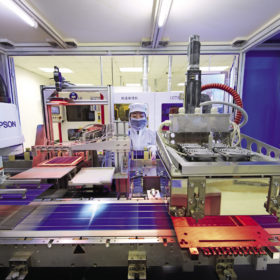
Chinese PV Industry Brief: Production expansion plans for Trina, JA Solar, ZNshine
Trina Solar said this week that it plans to expand cell production output by 10 GW at its factory in Jiangsu province, while JA Solar revealed plans to ramp up wafer production by 20 GW. ZNshine Solar, meanwhile, is aiming for 10 GW of new PV module capacity.
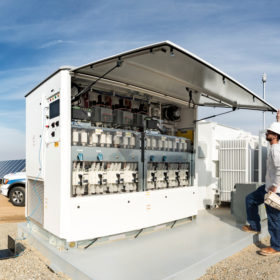
SMA reports 42% increase in turnover, Meyer Burger swings to a loss
German inverter manufacturer SMA Solar Technology reported solid financial results for the first half of 2020 despite the Covid-19 crisis. Meyer Burger, however, saw sales and profits decline.
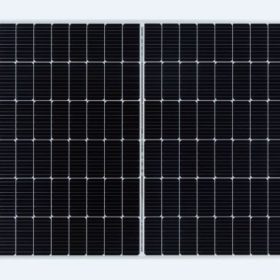
Talesun unveils 570-590 W solar module series
The new module series is available in five versions with power outputs claimed by Talesun of 570-590 W and reported efficiencies of 20.3-21.0%.

Solar modules with glass-enameled steel backs
U.S.-based Toledo Solar has secured a grant from the U.S. Department of Energy to conduct research on lighter, steel-backed solar modules.
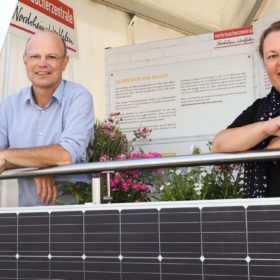
Germany’s untapped potential for balcony PV panels
In the German state of North Rhine-Westphalia, a balcony module, with an upfront investment of €350 to €500, can provide electricity with a current value of €54 per year. The payback period ranges from six to nine years.
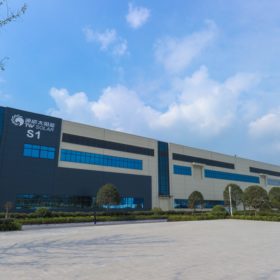
Chinese PV Industry Brief: Higher cell prices and plans for 36 GW of new cell capacity
Chinese solar cell manufacturer Tongwei has raised its cell prices by 9% this week after having increased them by 10% three weeks earlier. Another cell manufacturer, Aiko Solar, has unveiled a plan to deploy 36 GW of new cell production capacity.
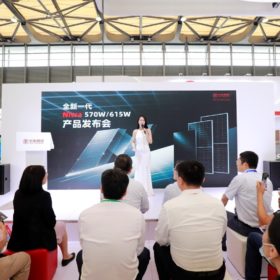
Jolywood announces bifacial panel with 615 W ouptut
Presented at the SNEC fair in China, the Niwa Super module series has a power output ranging from 570 W to 615 W and a reported efficiency of 22.1%.
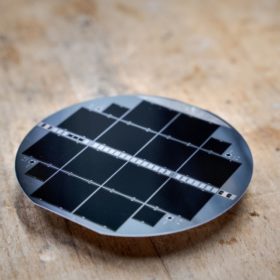
Fraunhofer ISE claims 25.9% efficiency for III-V tandem solar cell
The new results mark an improvement on the institute’s previous 24.3% efficiency record. The III-V tandem solar cell is directly grown on silicon.
