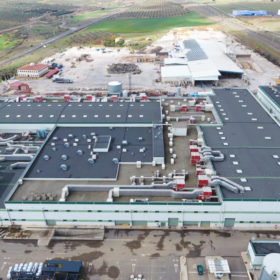
Solar grade silicon production comes back to Spain
Rivas-Vaciamadrid-based company Aurinka is planning to start UMG silicon manufacturing in Puertollano, Castile-La Mancha, this year. The company says its patented low-carbon production process offers low enough manufacturing costs to compete with Asian rivals.
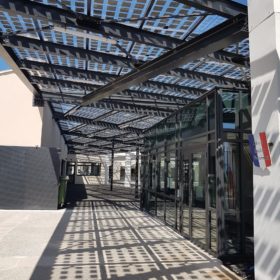
BIPV solar modules with varying transparency
German panel maker Sonnenstromfabrik has developed a glass-glass monocrystalline PV module in three versions offering different levels of transparency. The company says the transparency feature makes the panels suitable for verandas, pergolas, awnings, carports, swimming pools, halls and facades. Their power output varies from 160 W to 280 W, while their efficiency ranges from 9.5% to 16.7%.
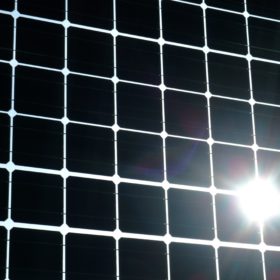
A new concept for heat-recovery solar cells
Researchers in Japan have demonstrated a new concept for a ‘heat-recovery’ solar cell, which they claim has the potential to exceed the theoretical limit for cell efficiency. They say, however, that a suitable material for the energy filtering layers is yet to be identified. The cell is equipped with a 100-micron thick silicon absorber, two electrodes and carrier-energy filtering layers placed between the absorber and electrodes.

Bangladeshi solar installers call for waiver of state loans
Installers which took advantage of cheaply-priced government finance say customers affected by the Covid-19 crisis cannot afford to pay for the solar home systems they have rolled out while expanding renewables programs.
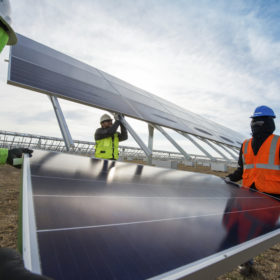
SunPower sells off its O&M business, gets regulatory approval for Maxeon spinoff
SunPower has had to make fundamental changes to continue to be relevant in a solar industry very different from that of its roots. The company aims to become an energy service provider and is leaving low-cost manufacturing to its Chinese partner.

Chinese PV Industry Brief: 3.95 GW of new PV in Q1, new 500 W-plus modules, and a panel with 23.2% efficiency
China’s cumulative installed PV capacity topped 208 GW at the end of March, thanks to 3.95 GW of new projects completed in the first quarter. JinkoSolar and Longi both joined the 500 W-plus module race, with their new panels offering 580 W and 530 W of output, respectively. Ginlong, meanwhile, has revealed plans to raise funds to increase its annual inverter production capacity to 20 GW, and Xi’An Solar has claimed a 23.2% efficiency rate for its N-type TOPCon modules in mass production.
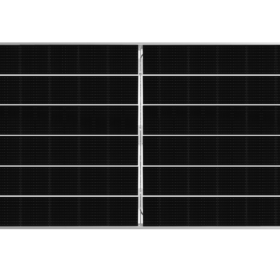
Jinko launches PV module with record output of 580 W
The panel is part of the company’s new Tiger Pro series, which includes two 530 W modules and a 430 W product for distributed-generation applications. It will begin production of the series in the fourth quarter, although it will start accepting first orders immediately.
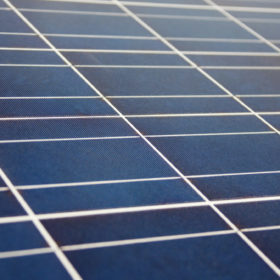
New CdTe panel manufacturer
U.S.-based Toledo Solar is trying to distinguish itself from First Solar’s cadmium telluride dominance by operating in the residential and commercial segments, which have long been unkind to the technology.

REC Group confirms patent action against Hanwha in China
The Chinese state-owned solar manufacturer has filed a claim against its Korean competitor relating to REC’s split-cell and junction box technology.
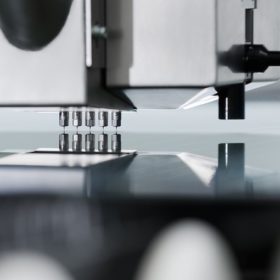
Hard times for German PV equipment providers
German engineering association the VDMA expects a difficult year because of the Covid-19 crisis. Sales had already dropped considerably last year and the current order intake level offers no glimpse of hope. However, the public health crisis may offer business in new markets determined to break a dependence on Chinese panels.
