
SEG Solar starts building 3 GW solar ingot, wafer factory in Indonesia
U.S-headquartered SEG Solar is constructing a 3 GW ingot and wafer factory in Indonesia. The new production is located at its existing cell manufacturing facility, completing an end-to-end solar manufacturing chain for the company.

The impact of laser-assisted firing on TOPCon solar cell performance
UNSW and Jolywood studied the thermal stability of laser-assisted fired TOPCon solar cells during module fabrication and high-temperature stress, identifying hydrogen-related defect dynamics as the key factor behind degradation and recovery. They found lamination causes temporary efficiency losses that self-recover under light exposure, while optimized LAF can restore degraded contacts, providing practical guidance for reliable module manufacturing and testing.
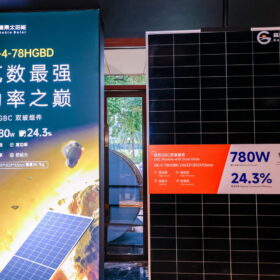
Gokin Solar launches new back-contact solar module series
Gokin has launched back-contact solar modules ranging from 480 W to 780 W for residential, C&I and utility-scale projects. The series supports 1,500 V systems and reaches efficiencies of up to 24.8%.
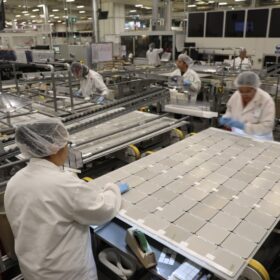
Maxeon expands legal action against Aiko and its distributors in Germany
Maxeon has filed a lawsuit in Germany claiming Aiko Solar, and four of its German product distributors, breached a patent related to its back contact solar technology. It is the third such lawsuit Maxeon has opened against Aiko.
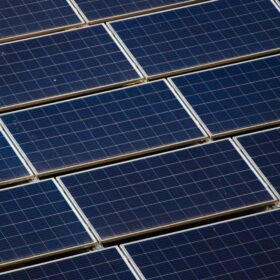
Hebei Juhang Energy Technology plans solar panel factory in Pakistan
China’s Juhang Energy Technology met with representatives from Pakistan’s Board of Investment to discuss implementation of a solar panel manufacturing facility in Pakistan, aimed at both domestic demand and potential exports.
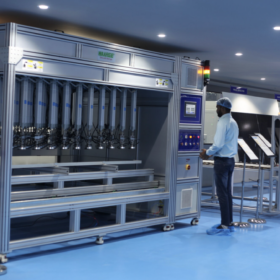
India’s Waaree Energies lifts global solar module capacity to 22.3 GW
Waaree Energies says its latest factory expansion strengthens supply to India and the United States as global demand for high-efficiency solar modules accelerates.

China National Petroleum Corporation achieves 25.05% efficiency for inverted perovskite solar cell
The Chinese energy and oil company said the cell can be used as a top device in perovksite-silicon tandem configurations. The result was confirmed by the Shanghai Institute of Microsystem and Information Technology (SIMIT).

Canada opens review into anti-dumping duties on Chinese PV modules, laminates
Canada’s International Trade Tribunal is running an interim review of the country’s anti-dumping and countervailing duties on solar modules and laminates from China, following a request to exclude flexible solar panels that affix to curved surfaces.
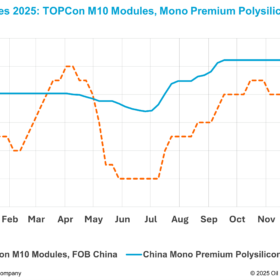
China module market watches 2026 export rebate signals as polysilicon consolidation platform company is registered
In a new weekly update for pv magazine, OPIS, a Dow Jones company, provides a quick look at the main price trends in the global PV industry.

Aluminum-doped zinc oxide glass coating for shielded space solar PV modules
South Korean researchers developed a process that allows the use of aluminum-doped zinc oxide film in radiation-shielding quartz glass. A demonstration in III-V solar photovoltaic space modules showed it significantly enhanced shielding effect of bare quartz glass.
