
Solar trade dispute: US agrees consultation with Korea, EU, China, Malaysia and Thailand
Through the consultation, the U.S. aims to settle the dispute over the 30% import tariffs, introduced under Section 201.

REC Group launches new half-cell solar module
At last week’s Intersolar Europe show in Munich, Norwegian headquartered manufacturer REC Group unveiled its latest module innovation, the N-peak series. The new solar PV modules will be the first to combine n-type, mono-cSi and half-cut cell technologies.
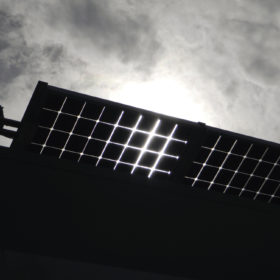
The weekend read: Heads you win, tails you win
One manufacturer after another has announced bifacial modules, and buyers would do well to consider the benefits. Independent calculations show that increases of up to 15% or more are realistic in countries such as Germany.
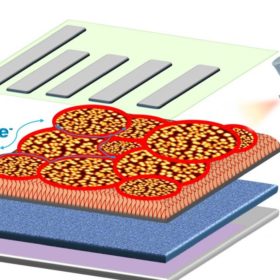
Researchers turn to spray coating in applying ETL to perovskites
Perovskites, a tempting low-cost alternative to crystalline silicon based solar cells, could be moving closer to commercial production thanks to a new way of applying the critical electron transport layer (ETL) pioneered by an international team of researchers.
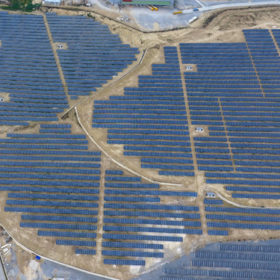
Turkey: ‘Localisation’ trend dominates the energy sector
Turkey is going to the polls on Sunday, and many wonder whether president Recep Tayyip Erdoğan’s gamble on a snap election could backfire. Unless there is a shock at the ballot box though, the nation’s energy sector trends are unlikely to be challenged.

Suntech announces panel supply deal for Australia projects
Former manufacturing giant establishes a foothold in the promising Australian market, and says it is in talks with developer Biosar about supplying further modules for projects in the nation.

India moots world’s largest solar tender – of 100 GW
If implemented, the huge tendering exercise would dwarf anything that has gone before it. Minister explains bidding will also include solar manufacturing and storage elements.

The smarter E show: A wealth of innovations rewarded
At the smarter E-Intersolar Europe trade show this week, awards have been given to the technologies driving the energy transition to a low carbon future. Prizes include the Intersolar Award, recognizing PV technology; the EES prize for storage innovation; and the smarter E awards – one of which was given to an off-grid agricultural project in Australia.

Intersolar: Indian minister outlines plan to become global renewables leader
Underlining India’s commitment to becoming the global renewable energy leader, Shri Anand Kumar, Secretary of India’s Ministry of New and Renewable Energy, said the country plans 500 GW of capacity by 2030. He also underlined India’s plans for becoming a solar and storage manufacturing hub; and said the International Solar Alliance needs to widen its membership.
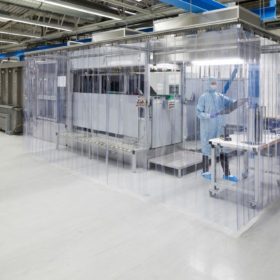
Nexwafe announces 250 MW “disruptive” kerfless wafer factory in Bitterfeld, Germany
The utilization rate of materials and energy in Nexwafe’s kerfless wafer production processes is said to be almost 100%, at a time when price pressures on solar modules are expected to get significantly heavier in the immediate future.
