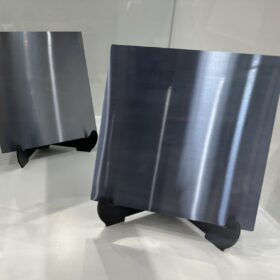
Chinese PV Industry Brief: Wafer prices fall on weak demand
The China Nonferrous Metals Industry Association (CNMIA) says polysilicon and wafer prices continued to fall this week, with n-type re-feed and dense polysilicon down 6.39% and 6.42% to an average of CNY 45,200/ton ($6,240).
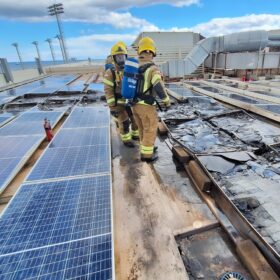
Fire hits PV-equipped sport complex in Gibraltar
Fire caused by an electrical fault from an overheated arcing cable hit the solar panels at Europa Point Stadium in Gibraltar. Firefighters contained and extinguished the blaze within 20 minutes.

Increased spacing between solar module rows boosts agrivoltaics viability
U.S. researchers developed a framework showing that wider spacing between solar PV rows can make agrivoltaic systems economically viable for large-scale mechanized farming. Their simulations in Colorado demonstrated that optimized row spacing maintains crop production while improving combined agricultural and energy revenues.
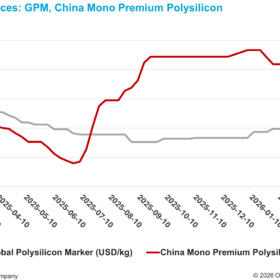
China polysilicon prices fall over 13% year-to-date as below-cost selling persists
In a new weekly update for pv magazine, OPIS, a Dow Jones company, provides a quick look at the main price trends in the global PV industry.

Japanese researchers achieve world record efficiency of 12.28% for copper gallium selenide solar cell
Researchers in Japan have achieved a 12.28% efficiency in a copper gallium selenide solar cell, the highest reported for indium-free wide-bandgap chalcogenide absorbers in the 1.65–1.75 eV range. The device uses aluminum-engineered films with a back-surface field and optimized cadmium sulfide buffer layers to enhance voltage, reduce recombination, and improve overall performance.
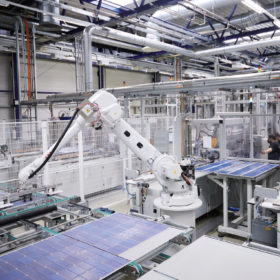
Swift Solar acquires Meyer Burger assets to scale U.S. HJT and perovskite production
Solar manufacturer Swift Solar has acquired the heterojunction technology (HJT) intellectual property and manufacturing assets of Meyer Burger to establish domestic cell production.

Russia adds around 100 MW of solar in 2025
GlobalData says Russia added an estimated 100 MW of solar last year, taking total installed solar to around 3.1 GW. The consultancy is forecasting annual additions of about 200 MW over the next ten years, taking the country’s cumulative solar capacity to 5.3 GW by 2035.
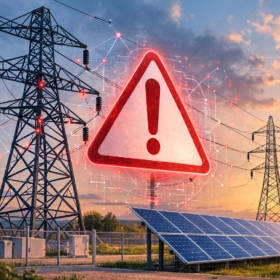
New simulation platform lets energy operators train against realistic cyberattacks
Researchers at Germany’s Fraunhofer FKIE institute developed PowerRange, a virtual simulation platform that helps power grid operators safely test cybersecurity measures and respond to realistic cyberattacks. The platform supports both traditional and renewable grids, offering immersive training across IT, OT, and control systems while highlighting the importance of coordination, communication, and practical defense strategies.
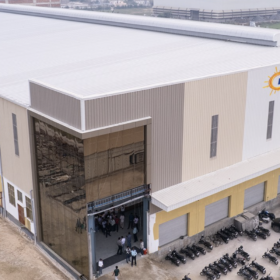
Eastman launches 800 MW solar module plant in India
Eastman Auto & Power has started production at an 800 MW solar panel factory in the Indian state of Haryana.

Antimony emerges as strong candidate dopant for Czochralski PV wafers
Researchers from Australian National University and Longi used photoluminescence imaging to analyze dopant distributions in RCz-grown silicon wafers doped with antimony, phosphorus, and gallium, finding highly uniform radial concentration profiles suitable for high-efficiency solar cells. The study also found that antimony-doped wafers provide more stable axial doping along the ingot, highlighting their potential for next-generation photovoltaic manufacturing.
