
EU funds pilot plant for PV module recycling
German company, Geltz Umwelt-Technologie has developed an advanced recycling plant, which it says could recover up to 95% of the materials in a module for reuse. With funding from the EU’s Horizon 2020 project, the company is planning a pilot facility that could recycle up to 50,000 silicon based PV modules per year.
Sweden’s Midsummer receives $3.3 million CIGS equipment order, announces expansion
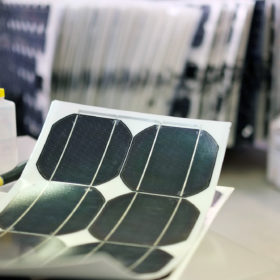
Turnkey PV equipment supplier, Midsummer has received a repeat order from an unidentified Asian customer for its thin film cell production equipment. On the back of strong demand, it adds that expansion is on the cards.
Taiwan’s Motech scales back solar cell capacity
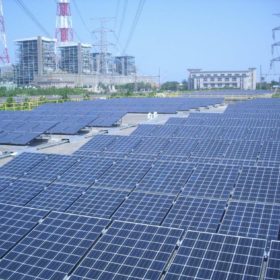
Taiwanese solar PV cell manufacturer, Motech has shut down production in Suzhou, China, and potentially shelved plans for an 800 MW fab in Kunshan. It will instead focus production on two other sites in the country. In Taiwan, it has reportedly stopped production of solar ingots and wafers, and has suffered massive Q2 2018 losses.

Kness Group to build 400 MW solar panel factory in Ukraine
The first 200 MW section of the manufacturing facility, to be located in Vinnytsia, in Central Ukraine, is set to be operational by the end of this year. The second 200 MW phase of the project will be implemented by the end of 2019.

Researchers propose doubling today’s solar panel efficiency using two weird tricks
By double stacking a perovskite-silicon solar cell and using the cell in a glass-on-glass bifacial solar module, scientists model that a 30-36% efficient solar module can be attained.

Hungary: EcoSolifer’s 100 MW HJT cell production line back on track
The vertically integrated Swiss company has announced work on its 100 MWp heterojunction PV cell manufacturing plant in Hungary is back on track, following a successful company restructuring. Originally, it was set to be online in 2016.
PV division carries Manz thanks to big CIGS order from China
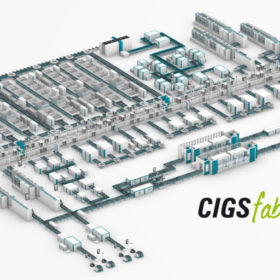
With capital projects CIGSfab and CIGSlab – according to the PV equipment provider – on schedule, Manz expects big follow-up orders from its Chinese customers as solar provided the highlight of the parent company’s first-half figures.
India set to add almost 60 GW of new solar by 2023
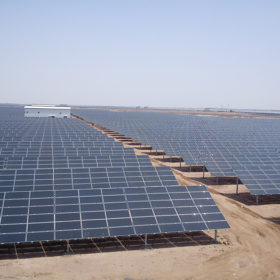
A combination of national, state and public body commitments could see the amount of PV added nationally treble on the last four-year period. But even with a new 7-8 GW added, rooftop solar will still be bringing up the rear.

The weekend read: Cells of the future
For solar to survive in a world without feed-in tariffs, further innovation focused on cost reduction is necessary. In this white paper, scientists from Swiss equipment supplier Meyer Burger argue that high efficiency cell concepts, and in particular heterojunction, will be among the best technologies solar can bet on to achieve this.
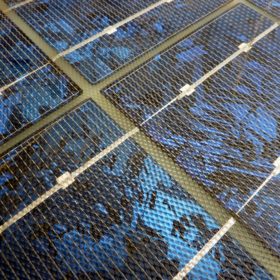
Solar cell prices decline in reaction to safeguard duties, impending MIP decision
“Significant” price movements in solar PV cells has been observed this week, in reaction to India’s safeguard duties, and the impending MIP decision, says EnergyTrend. Module, wafer and polysilicon prices, however, remain stable. In contrast, prices for li-ion batteries are set to increase by as much as 15% in Q3.
