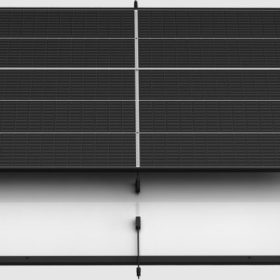
Trina Solar launches 425W rooftop module with 21.9% efficiency
Trina Solar has unveiled a new PV module for residential and commercial applications. It has chosen the Australian market for the global launch of the new rooftop solar panel.
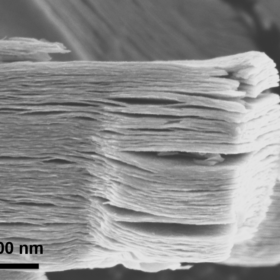
Solar cells based on 2D carbides, nitrides
Researchers from Qatar and South Korea have studied the potential of solar cells based on 2D MXenes materials. They said that titanium carbide MXene (Ti3C2Tx) is the most promising material in the MXene family for PV applications.
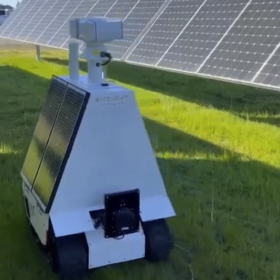
Fully autonomous robot for solar O&M
OnSight Technology has developed a tele-operated vehicle to clean solar arrays. It is equipped with a radiometric thermal imaging camera and an optical zoom camera backed by artificial intelligence. It has a range of 12 hours and a speed of 1.6 km per hour.
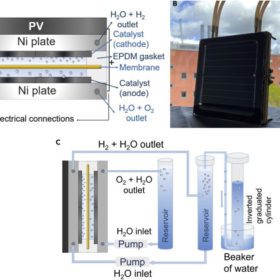
Thermally integrated PV-electrolyzer with 9.1% solar-to-hydrogen efficiency
A Swedish research group has developed a device combining CIGS thin-film solar modules and an alkaline electrolyzer based on a trimetallic cathodic catalyst made of nickel, molybdenum, and vanadium (NiMoV) and an anode made of nickel oxide (NiO). The electrolyzer achieved an average solar-to-hydrogen (STH) efficiency of 8.5% for stable operations during 100 hours.

Cybersecurity for distributed energy, inverter-based resources
UL and the US National Renewable Energy Laboratory have released a report on cybersecurity certification recommendations and are actively developing new requirements to create cybersecurity certification standards.

The EU plan to drastically ramp renewables to replace Russian gas
The European Commission yesterday announced its intent to remove demand for two-thirds of its Russian gas supply in less than nine months and hugely accelerating the rate of solar deployment is a central part of its radically raised clean energy ambition.
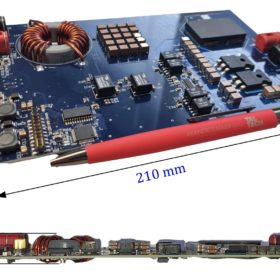
Novel power electronic converter for BIPV
Conceived by researchers in Estonia, the device is claimed to be compatible with both crystalline silicon and thin-film BIPV panels and to manage, easily, different voltage levels. It can be applied either in solar facades or BIPV rooftop arrays.
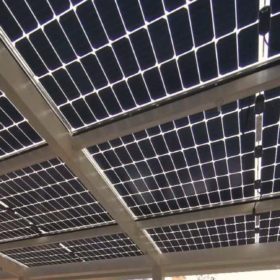
Longi releases Hi-MO 5 snow-load test results
Longi Solar has released the data of an inhomogeneous snow-load test. Its results show that its 72-cell solar modules held 1,800 pascals more force than a competing large format product using 210 mm cells.

Submersing modular raft for floating photovoltaics
Developed by a Dutch consortium, the Hide and Shine Floating Solar (HAS FPV) technology is claimed to be extremely resistant to storms and harsh weather conditions. The modules can be submerged totally or partially and, in case of a severe storm, they can be submerged up to two meters below the surface.
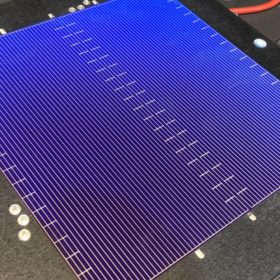
Chinese PV Industry Brief: Wafer prices rise as Aiko Solar halts shares offering
Manufacturers Longi and Zhonghuan Semiconductor have both raised the price of their 182mm wafers while holding the cost of their other products as rival Shuangliang Eco-energy signed deals for more wafer production equipment.
