Even if it is cheap enough, efficiency does matter
A British-German research team claims that organic PV technologies may become mature enough to compete with crystalline silicon and thin-film products not only in BIPV, but also in power generation in the electricity market. In order to get there, however, organic PV products will have to achieve higher efficiencies.
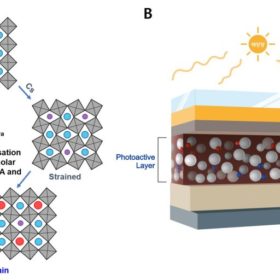
25.17% efficient perovskite solar cell via new photoactive layer
Scientists in South Korea demonstrated a perovskite cell with a certified efficiency of 24.4%. The device is claimed to maintain over 80% of its initial efficiency after 1,300 hours in the dark at 85 degrees Celsius.
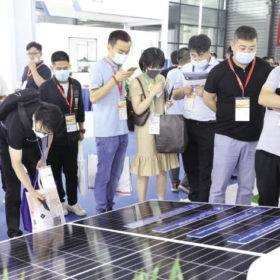
The weekend read: Bigger modules yes, but better…?
It is now a well-established trend. After the switch to larger wafer sizes played out in 2019, this year has seen virtually all of the biggest PV manufacturers introduce new modules in dimensions above the 2-meter mark, and with power ratings in excess of 500 W – in some cases, as high as 800 W. As these modules begin to roll off production lines in larger quantities, it’s vital to take a look at the challenges and opportunities they bring to system design, installation, and long-term operation.
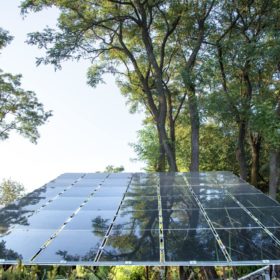
BIPV module with novel encapsulation design
Researchers at the University of Malaga say they have developed a panel for building-integrated photovoltaics that improves light absorption without losing efficiency and durability.
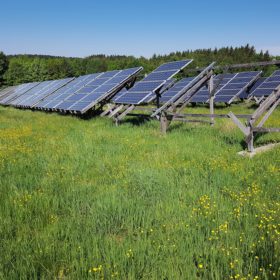
Chinese PV Industry Brief: Jinko announces 2 GW agrivoltaic project in Heilongjiang Province
Meanwhile, Chinese state-owned energy company State Power Investment Corporation (SPIC) has acquired a solar energy developer in Mexico and JA Solar has started construction on the second phase of its 20 GW ingot factory in Yunnan Province.
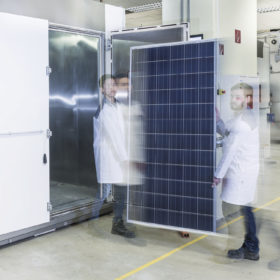
The struggle against LeTID continues
Researchers in Australia have conducted extensive research on all possible causes behind the light-elevated temperature-induced degradation (LeTID) in solar panels and presented a few mitigation strategies put in place by manufacturers to reduce its effects.

Midsummer to set up 50 MW BIPV module factory in southern Italy
Through this new project, the Swedish CIGS turnkey equipment supplier aims to expand its presence in southern European PV markets.

Iberdrola and Ingeteam set up JV to produce electrolyzers in Spain
Iberlyzer will begin operations next year and will produce more than 200 MW of electrolyzers in 2023, with an initial investment of close to €100 million. In addition, the Spanish energy giant has signed an agreement with Norwegian company Nel to build and develop large electrolyzers in Spain.
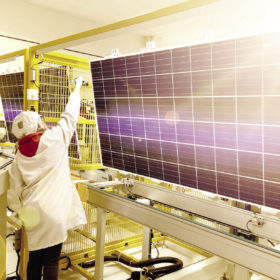
Canadian Solar flags up polysilicon, glass and EVA shortages
The solar manufacturer’s impressive third-quarter gross margin is set to fall back in the current three-month window because global shortages have seen some material costs double since the world came out of Covid-19 shock.
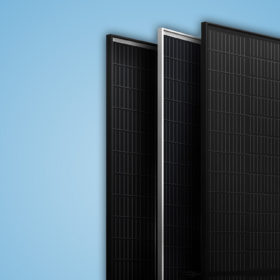
Trina moves to buy 72,000 tons of Tongwei polysilicon for 210mm operation
The Chinese giant plans to further strengthen the supply chain for solar modules based on 210mm wafers by establishing joint ventures with its rival.
