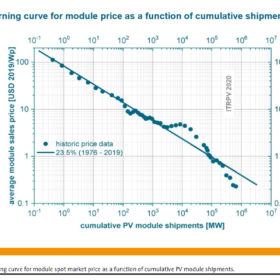
Solar costs set to continue falling according to ITRPV roadmap
The 11th edition of the German document which tracks solar price falls and efficiency improvements has considered the role bigger wafers are playing in cost reduction.
Ministry representative says Polish solar manufacturers could benefit from Covid-19 disruption to take market share from Chinese rivals
The Polish solar industry is reportedly planning an offensive to claim a bigger slice of the domestic PV market. The idea was apparently floated by the head of a private renewable energy body.

Single‐walled carbon nanotubes for more efficient III‐V solar cells
Russian researchers have improved the efficiency of a thin-fim GaAs‐based solar cell by 0.9% by applying single‐walled carbon nanotubes as the topmost layer. The cell also showed a slight increase in the short circuit current density, from 16.9 to 17.9 mA/cm2.
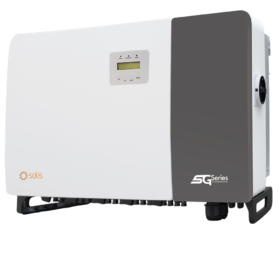
New 5G string-inverter for commercial applications from Ginlong
The Chinese manufacturer has integrated the Solis 110 kW string inverter into its 5G tech platform. The company claims the upgraded device can offer stronger system returns and a lower levelized cost of energy. The price of the Solis-110K-5G inverter is €0.035/W.
Amerisolar plans new 200 MW solar panel factory in Brazil
Chinese manufacturer Amerisolar and Brazilian energy company Nova Renováveis are planning to set up a 200 MW solar module manufacturing facility in Belo Horizonte, in the Minas Gerais state.
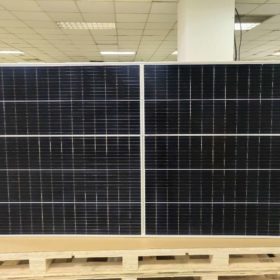
TÜV Rheinland confirms 515.8 W output for Trina’s new modules
Trina Solar has been producing its 500 W modules in series for a month now and plans to increase their output to more than 600 W in the future.
Chinese manufacturer looks to pv magazine for its Covid-19 updates
Manufacturer Solargiga referenced our website, rather than official channels, to have a stab at anticipating the possible effects of the public health crisis on the industry as it insisted production lines powered by bargain-basement electricity prices this year would help turn around a $50 million loss for 2019.
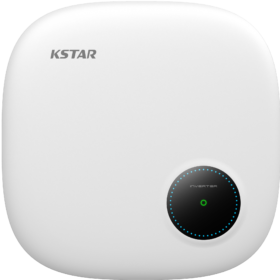
Kstar launches new inverter series for rooftop arrays
The transformer-free products have a power range of 3-6 kW and efficiency of 97.8%. The Chinese manufacturer says the devices are designed to accurately match the voltage and phase of the grid sine wave AC waveform.
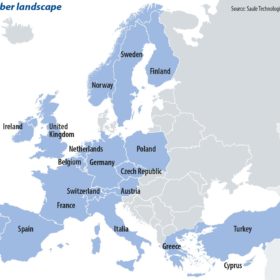
The weekend read: Mobilizing Europe for perovskite PV
As a relatively new and rapidly emerging PV technology, perovskites present an opportunity for the European Union to once again play a prominent role in solar manufacturing. So argues Louis Huber from the European Perovskite Initiative, a group that is trying to coordinate European perovskite PV activities across research, industry and politics.

‘Free-form’ organic PV
French organic PV module manufacturer Armor said it began manufacturing free-form PV modules in early April. The new technology will allow the company’s ASCA PV film to be produced in a range of different shapes.
