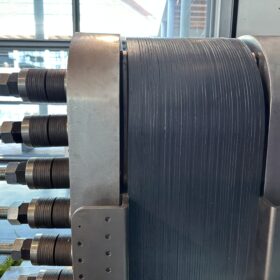
The Hydrogen Stream: DNV launches hydrogen blending studies in North America
DNV has started working on blending feasibility studies in the Canadian province of British Columbia, while the US Department of Energy has announced $750 million in funding for 52 hydrogen projects across 24 states.
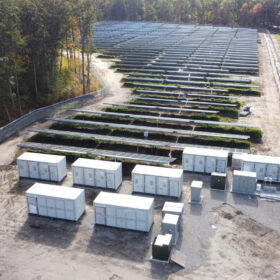
Bulgaria launches renewables-plus-storage tenders
Bulgarian businesses can apply for funding under two new tenders that aim to facilitate 1,425 MW of renewable energy generation capacity coupled with 350 MW of energy storage. Funding support is only offered for the storage component.
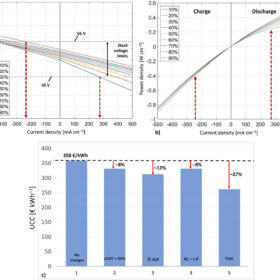
Evaluating the profitability of vanadium flow batteries
Researchers in Italy have estimated the profitability of future vanadium redox flow batteries based on real device and market parameters and found that market evolutions are heading to much more competitive systems, with capital costs down to €260/kWh at a storage duration of 10 hours.
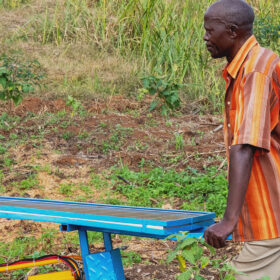
After-sale support key to boosting off-grid solar
A new survey from US-based impact measurement company 60 Decibels shows off-grid energy customers are currently facing a series of challenges such as product affordability, gender inequality, customer support, further investment in minigrids, and over-indebtedness. The report, however, reveals that most users say the quality of their lives “very much improved” thanks to off-grid PV.
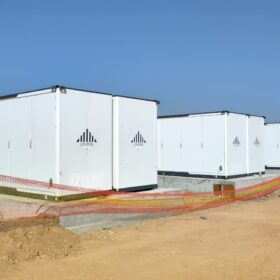
India allocates 480 MW renewables-plus-storage at $0.068/kWh
The winning developers will set up renewable energy projects backed with energy storage system to supply firm and dispatchable renewable energy in a demand-following manner.
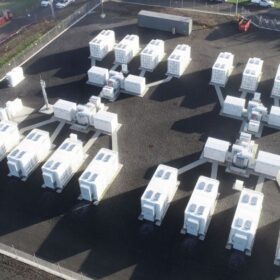
New Zealand welcomes first big battery to national grid
New Zealand’s transition to a renewable energy future has taken a significant step forward with the nation’s first grid-scale battery energy storage project now offering injectable reserves to the electricity market for the first time.

Car batteries can optimize the power grid
Australian researchers have found that if 10% of vehicles are electric and utilize V2G connections, they could reduce peak electricity demand at local substations by 6% and save car owners hundreds of dollars per year on charging costs.
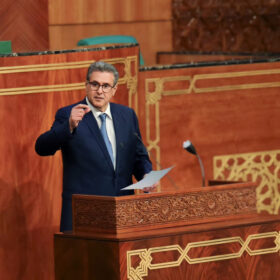
The Hydrogen Stream: Morocco identifies land for green hydrogen
Morocco has presented its new hydrogen strategy, while Uniper and Phillips 66 have announced plans to launch a green hydrogen project in the United Kingdom.

Pedaling Power
The co-founder of a Lithuanian company which has developed a new exercise bike that can generate and store electricity makes the case for the contribution “energy harvesting from daily human activity” can make to the energy transition.
Gensol Engineering wins 70 MW/140 MWh in Indian storage tender
Gensol Engineering has agreed to deploy a 70 MW/140 MWh battery energy storage system (BESS) in India for Gujarat Urja Vikas Nigam Ltd. (GUVNL) on an on-demand basis.
