
Weekend Read: Agreeing on green hydrogen
In November 2022, Germany’s Energie Baden Württemberg and steelmaker Salzgitter Group signed one of Europe’s first power purchase agreements (PPAs) for hydrogen production. More have followed and with the European Union introducing rules to govern green hydrogen, an industry is planning for its future.
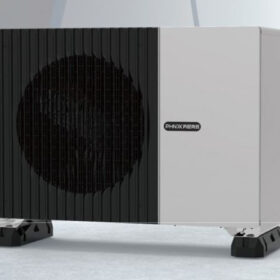
Phnix releases residential air-to-water heat pump
The Chinese manufacturer said its new propane heat pump has a seasonal coefficient of performance exceeding 5.0.
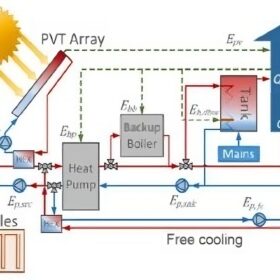
Hybridizing residential ground source heat pumps with PVT, free cooling
Researchers in Sweden sought to raise the efficiency of ground source heat pumps by combining their operation with that of PVT systems and free cooling. Through a series of simulations, they found that this integrated solution may reduce borehole length and land area requirements.
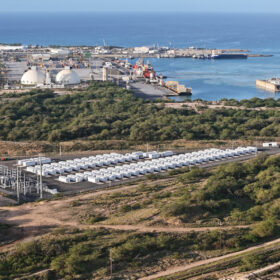
Hawaiian utility to balance grid with 565 MWh battery
A large grid-scale energy storage project in Hawaii, featuring Tesla Megapacks, could potentially minimize the curtailment of renewables output.
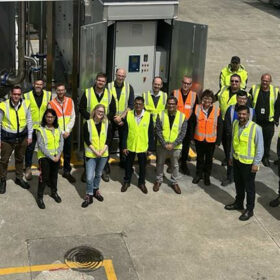
Fonterra reveals high-temperature industrial heat pump
Fonterra, a New Zealand-based dairy producer, has started operating a new heat pump in combination with a solar thermal facility. The hybrid project transforms excess heat from chillers and compressors into a heat source for industrial use.
Whale algorithm to integrate rooftop solar with air source heat pumps
Researchers in China have developed an optimized version of the whale optimization algorithm that reportedly indentifies the optimal area ratio of rooftop PV systems and solar collectors used in combination with air source heat pumps. They demonstrated that the installation area of photovoltaic modules and collectors affects both the power side and the thermal side.
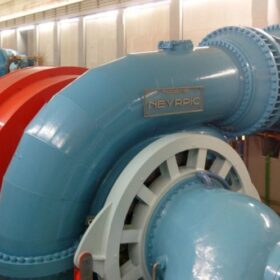
JSW Energy to set up 1 GW pumped storage project in India
JSW Energy says it will expand its renewables footprint in the Indian state of Tamil Nadu with an investment of $1.44 billion, including 1 GW of pumped storage and 1 GW of wind power.
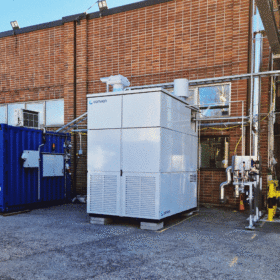
The Hydrogen Stream: Consortium unveils 85%-efficient solid oxide electrolyzer
Elcogen and Convion have revealed test results for their new solid oxide electrolyzer, with an electrical efficiency above 85%. It could potentially facilitate the production of 39 kWh of electrical energy per kilogram of green hydrogen.
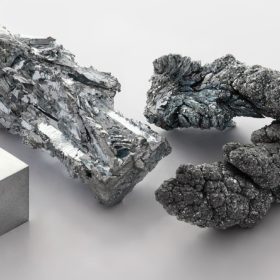
Australian researchers reveal ‘scalable’ aqueous rechargeable zinc batteries
Researchers from the University of New South Wales (UNSW) claim to have developed a technology that overcomes the recharging capabilities associated with aqueous zinc battery technology, potentially redefining energy storage for homes and grids.
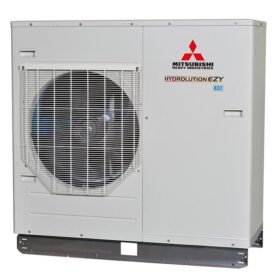
Mitsubishi debuts residential air-to-water heat pumps
Mitsubishi’s monobloc Hydrolution EZY can reportedly produce domestic hot water up to 60 C when outdoor temperatures reach -25 C. It is available in two versions, with outputs of 10 kW and 14 kW.
