
Sodium-ion batteries key to EU competitive edge, says EESC president
European Economic and Social Committee (EESC) to put sodium batteries at the center of its EU industrial strategy work, calls for swift action. Opinions, stakeholder debates and a dedicated study planned.

South Korea to invest $223 million in next-generation distributed grid
The South Korean government has announced plans to invest KRW 321 billion ($222.6 million) in 2026 to upgrade regional distribution networks, deploy 85 energy storage systems, and expand solar integration while piloting microgrids and market reforms.
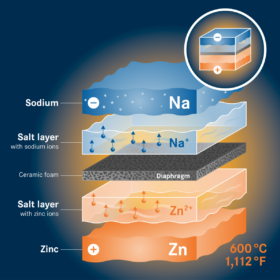
High-temp sodium-zinc batteries reveal causes of rapid capacity loss
Helmholtz-Zentrum Dresden-Rossendorf (HZDR) researchers have used operando X-ray imaging to reveal why sodium-zinc molten-salt batteries, operating at around 600 C and promising for stationary energy storage due to low-cost, abundant materials, experience persistent capacity loss.
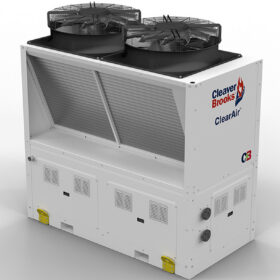
Cleaver-Brooks unveils air-to-water heat pump for hydronic heating
The ClearAir air-to-water heat pump is designed for hydronic heating in residential, commercial, and industrial buildings. Capable of generating hot water up to 80 C with integrated controls, it supports hybrid configurations across diverse applications.
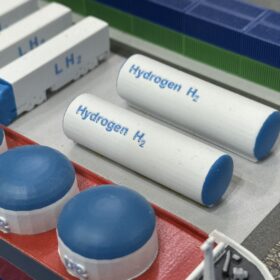
The Hydrogen Stream: Dutch agribusiness installs 1 MW electrolyzer
Dutch tulip nursery Rainbow Colors has completed the installation of a 1 MW solid oxide electrolyzer for on-site hydrogen production, while GlobalData says global low-carbon hydrogen capacity could reach up to 65.3 million tonnes per annum (mtpa) by 2030, driven largely by green hydrogen expansion in the Americas.
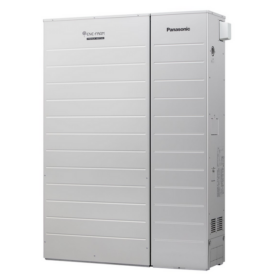
Panasonic debuts fuel cell cogeneration system for PV‑integrated homes
Panasonic has launched a new home fuel cell system for detached houses, designed to boost solar self-consumption through HEMS‑based smart scheduling. The unit generates electricity and heat from gas, supports demand response, and can supply emergency power during outages.
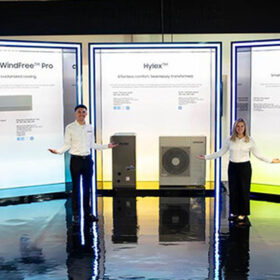
Samsung HVAC unveils inverter-driven residential heat pumps for cold climates
The US-based heating solutions provider said its Hylex inverter-driven heat pump offers 2–5 ton capacity, high efficiency, Wi-Fi control, and reliable cold-climate performance down to –25 C.
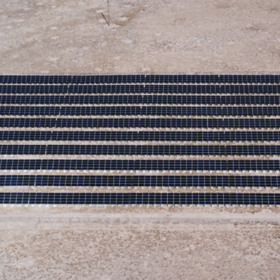
Zeo Energy signs MoU for 280 MW of solar plus LDES at Utah data center hub
Zeo Energy has signed a memorandum of understanding (MoU) with Creekstone Energy to supply 280 MW of behind-the-meter solar plus long-duration energy storage (LDES) for a new AI-focused data center campus in the US state of Utah.
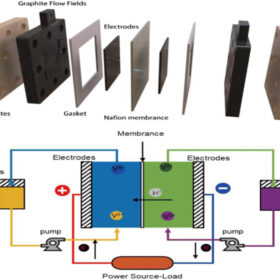
De-risking redox flow batteries for grid-scale storage
Following their review of redox flow battery research, Norway-based scientists told pv magazine that despite its high upfront capital costs and lower energy density relative to metal-ion, the technology can offer safety, reliability, and scalability advantages for standalone, large-scale applications.
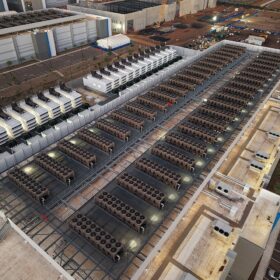
Mexico could become data center hub, but clean power lags behind
Mexico is attracting US data centers seeking faster power connections, but these facilities will initially rely on firm gas generation from the Comisión Federal de Electricidad (CFE), with renewables as a potential future option, Mexican energy expert Santiago Barcón told pv magazine.
