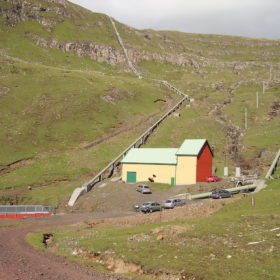
Pumped hydro storage project moves forward in Faroe Islands
SEV, the utility for the Faroe Islands, has secured funds from Nordic Investment Bank to build a pumped hydro storage facility on the island of Streymoy. The Mýruverkið II project, valued at DKK 1.3 billion ($174 million), is set to go online in the 2027-28 period.
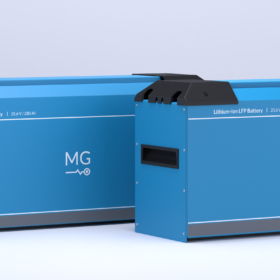
New battery for residential, commercial applications
Dutch manufacturer MG Energy Systems is offering a new storage system in two versions, with capacities of 5.8 kWh and 7.2 kWh and nominal capacities of 230 Ah and 280 Ah.
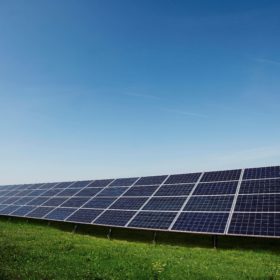
BayWa r.e. to develop hybrid solar-storage-hydrogen project in France
The Community of Communes of Haute-Saintonge on the mid-Atlantic coast of France has picked BayWa r.e. to develop an innovative hybrid project on the site of the Pôle Mécanique de la Haute Saintonge.
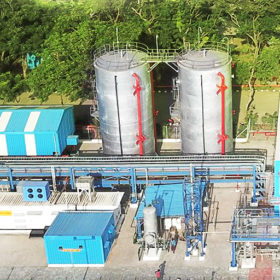
Larsen & Toubro builds green hydrogen plant in India
Larsen & Toubro, a Mumbai-based engineering group, has commissioned 380 kW of an 800 kW green hydrogen plant for self-consumption at its Hazira manufacturing complex in Gujarat, India.
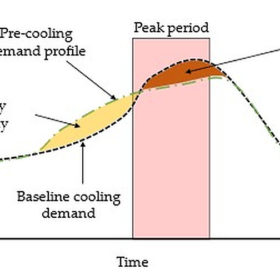
Rooftop PV for pre-cooling of residential, commercial buildings
Australian researchers have developed a way to use rooftop PV to run air conditioners to pre-cool residential and commercial buildings. They have identified several factors that could help reduce a building’s energy costs.
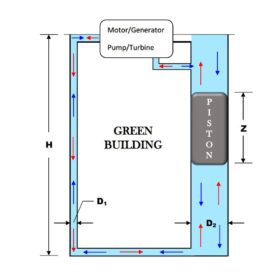
PV with gravity storage, redox flow batteries in buildings
Indian researchers have developed a new hybrid system featuring a conventional rooftop PV system, a solar tree, two gravity power modules for building (GPMBs), and a vanadium redox flow battery (VRFB), with power exclusively provided by the two solar installations.
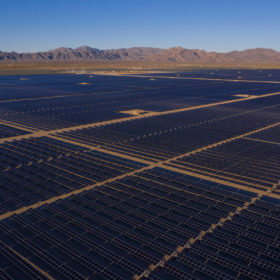
EDF Renewables activates 620 MW solar/200 MWh storage project
EDF Renewables has revealed that four projects at a US Bureau of Land Management site are now delivering clean energy to the California grid.
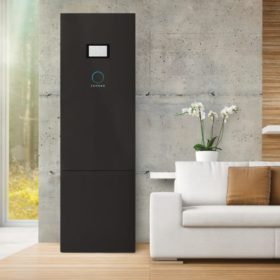
Italy hits 720 MW/1,361 MWh of distributed storage capacity
Italy added 303 MW/632 MWh of distributed energy storage capacity in the first half of 2022. The segment continues to grow in the country, with the regions of Lombardy and Veneto being the two largest contributors.
Green hydrogen project wins €10 million grant from Portuguese government
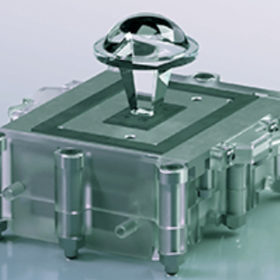
Fusion Fuel is set to receive a €10 million ($10.09 million) grant from the Portuguese government to develop a 6.6 MW green hydrogen project.
Long-term, heat-based energy storage in aluminum
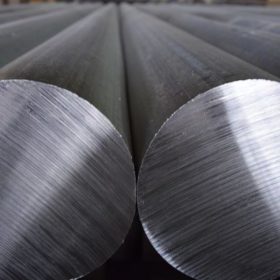
Nine partners from seven European countries are involved in the €3.6 million ($3.7 million) “Reveal” research project, which says buildings could be heated in the future by storing energy from PV, wind and water in aluminum.
