
World will need 5.2TW of solar this decade to avoid climate breakdown
The International Renewable Energy Agency’s latest global outlook has spelled out just how ‘woefully’ far the world is from capping temperature rises at 1.5C, and lamented: ‘The stimulus and recovery efforts associated with the pandemic have also proved a missed opportunity.’

GCL’s solar project business spells out how it slashed debts in 2021
The developer last year sold off 2.9GW of solar generation capacity to state-owned entities to reduce its debt pile by $1.76 billion and has another 298MW up for sale as it repeated its intent to switch to blue, and later, green hydrogen.
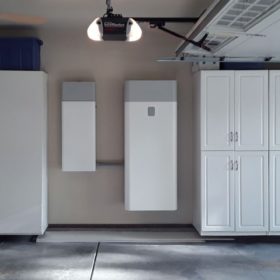
SunPower launches whole-home backup solution
The US manufacturer has expanded the battery capacity options for its SunVault Storage product, up to 26 kWh and 52 kWh configurations.
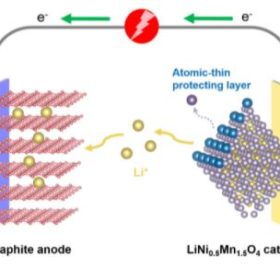
Australian researchers promise lifespan boost for lithium-ion batteries
Researchers from The University of Queensland have developed a new nanotechnology that purportedly more than doubles the lifespan of high-voltage lithium-ion batteries, paving the way for higher density and lower-cost energy storage solutions.

Cathode formation issue could drive improvements in battery resiliency
Researchers at the Argonne National Laboratory have discovered a degenerative effect in the creation of cathode materials for sodium-ion batteries that could have significant impacts on the performance of sodium-ion batteries.
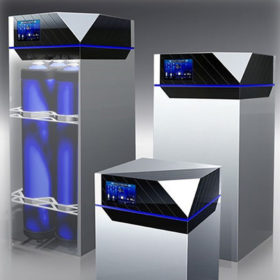
Toyota develops new module to store, transport hydrogen
Japanese automaker Toyota has used its hydrogen tank tech in a new module to expand hydrogen storage to railways, shipping facilities, cargo ports, and fuel cell generators. Its 70MPa tank has a storage capacity of 2.7 kg to 18.7 kg and a tank mass ranging from 43.0 kg to 243.8 kg, depending on the size.
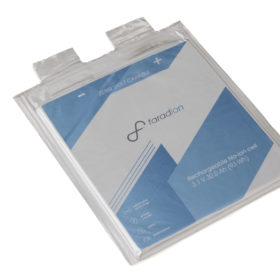
The weekend read: Sodium-ion batteries go mainstream
Sodium-ion batteries are emerging as a viable alternative to lithium-ion technology. Industrial heavyweights CATL and Reliance Industries, following the acquisition of UK-based sodium-ion specialist Faradion, are bent on bringing the technology out of the lab and into mass production. Against a backdrop of soaring prices and predicted shortfalls of lithium-ion battery materials, sodium-ion chemistry has never been more tantalizing.
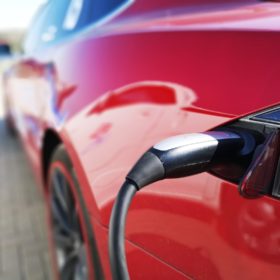
The mobility rEVolution: Quantum physics-based tech to cut EV charging time to nine seconds
In other news, StoreDot’s extreme fast charging EV technology gets one step closer to commercial viability and Volkswagen resumes European production. Moreover, Japanese carmakers are gearing up to claim their share of the European EV market.
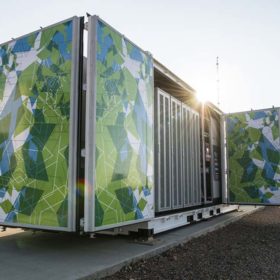
Developing better behind-the-meter energy storage
NREL researchers work on developing high energy density cells to advance stationary storage.
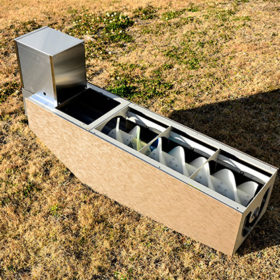
Ricoh launches mini hydropower system for remote locations, usable with solar-plus-storage
The pico-hydro generation system can be used with factory drainage systems and irrigation canals. According to the manufacturer, it is made with 3D-printed sustainable materials and is able to generate electricity even with a small stream of water. Solar and storage may be linked to the system to ensure stable power supply.
