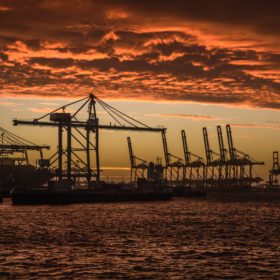
Portuguese green hydrogen for the Port of Rotterdam
The Portuguese and Dutch governments want to connect the hydrogen project of Sines to the Port of Rotterdam and to develop a strategic export-import value chain to ensure the production and transport of green hydrogen to the Netherlands and its hinterland.

‘European cobalt supply hinges on circular economy’
Amid an uptake in EV sales, researchers are examining battery material supply chains. A report has indicated policy-driven circular economy strategies must be introduced in Europe if the bloc is to strengthen its resilience to volatility in the cobalt market.

Iberdrola sets up green hydrogen unit
The Spanish energy company, which has hydrogen projects under way in its homeland and the United Kingdom, says it will allocate new resources to position itself at the forefront of the supply of renewables-powered hydrogen.
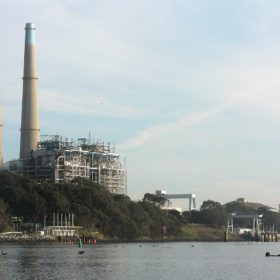
How does the US retire 236 GW of coal and 1,000 gas peaker plants?
Victory in the economic realm (increasingly the case with solar, solar-plus-storage and wind) is no guarantee of market victory if the regulations are stacked against renewables.
Power-to-hydrogen for multi-energy systems
Scientists in Switzerland say power-to-hydrogen is particularly promising for coupling electricity and heating and offsetting seasonal variation in renewables generation in sector-coupled energy networks. Their analysis indicated the technology may be especially useful in areas with a high ratio of seasonal thermal-to-electric demand.
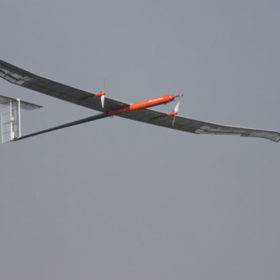
Solar-powered unmanned airplane with lithium-sulfur battery
The Korea Aerospace Research Institute has conducted a battery-powered test flight of solar-powered unmanned aerial vehicle EAV-3. The aircraft is powered by solar cells on its wings and body and an LG Chem lithium-sulfur battery.
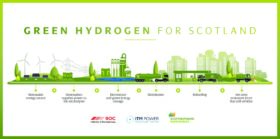
Scottish Power to bring parent’s hydrogen expertise to northern Europe
The U.K. utility is a partner in the Green Hydrogen for Scotland initiative which aims to be fueling commercial vehicles with sustainable hydrogen within two years, starting with a 10 MW electrolyzer on the outskirts of Glasgow.
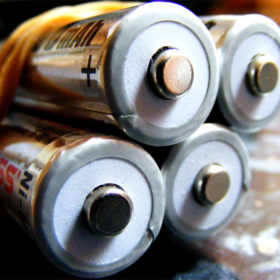
Plasma enables smaller, more powerful NMC-811 cathodes
Batteries could shrink even more with smaller crystals in the cathodes. Battery packs in electric vehicles and consumer goods could become smaller, while still offering high performance.

South Africa to tender 6.4 GW of solar and wind, 513 MW of storage and 4.5 GW of conventional generation
The country’s regulator has approved a government plan to tender for 11.81 GW of power generation capacity on top of the 2 GW tender opened last month.
Bangladesh set to embrace gas, rather than renewables
A national energy strategy which prioritizes coal is being ripped up just two years after its introduction, thanks to Covid-related slumps in demand, but legislators appear likely to look to gas, rather than solar and wind power as an alternative, due to land issues and energy storage costs.
