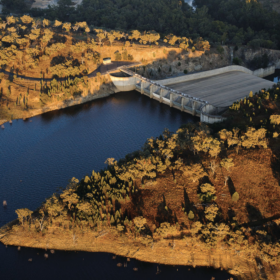
Australian state backs pumped hydro as long-duration energy storage
The New South Wales government in southeastern Australia has granted priority status to two large-scale pumped hydro projects, providing long-duration energy storage (LDES) to strengthen grid reliability.
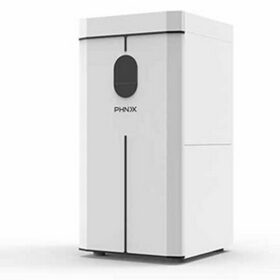
Phnix unveils indoor monobloc heat pump for space‑constrained urban retrofits
The Chinese manufacturer said its new airMono indoor monoblock heat pump is tailored for space‑limited urban retrofits, providing heating, cooling, and domestic hot water without an outdoor unit. The system’s coefficient of performance ranges from 2.5 to 4.1, while the seasonal coefficient of performance spans 4.5 to 4.7.
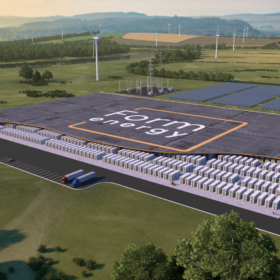
Google to deploy world’s largest iron-air battery for US data center
Google plans to deploy a 300 MW/30 GWh iron-air battery system in Minnesota under an agreement with Xcel Energy, pairing it with 1.6 GW of new wind and solar.

Solar electricity during night-time
Night-time in solar PV systems averages 16 hours, requiring significant storage or alternative generation to meet demand. Pumped hydro and batteries are key, with pumped hydro offering long-duration, low-cost storage for cloudy or windless periods. Complementary strategies include wind power, load shifting, and dispatchable generation, while high solar and wind penetration reshapes grid operations and pricing.
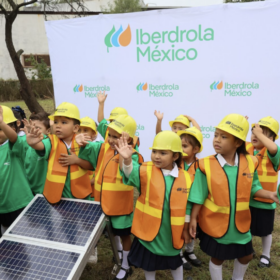
Mexico mandates social impact reviews for BESS projects
New rules from Mexico’s Secretaría de Energía require battery energy storage systems (BESS) to submit social impact assessments for the first time, with stricter obligations above 250 MWh.

‘Garbage in, garbage out’ – solar industry debates reality of AI
Artificial intelligence can accelerate the planning, construction, and operation of photovoltaic systems, as shown at the recent Solar Quality Summit in Barcelona, Spain. But its effectiveness depends on data quality, as poor data, unclear responsibilities, and weak documentation can become major cost drivers.

Sodium-ion batteries key to EU competitive edge, says EESC president
European Economic and Social Committee (EESC) to put sodium batteries at the center of its EU industrial strategy work, calls for swift action. Opinions, stakeholder debates and a dedicated study planned.

South Korea to invest $223 million in next-generation distributed grid
The South Korean government has announced plans to invest KRW 321 billion ($222.6 million) in 2026 to upgrade regional distribution networks, deploy 85 energy storage systems, and expand solar integration while piloting microgrids and market reforms.
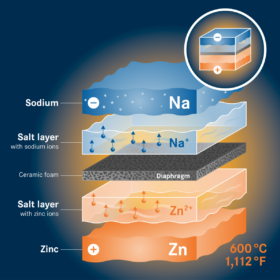
High-temp sodium-zinc batteries reveal causes of rapid capacity loss
Helmholtz-Zentrum Dresden-Rossendorf (HZDR) researchers have used operando X-ray imaging to reveal why sodium-zinc molten-salt batteries, operating at around 600 C and promising for stationary energy storage due to low-cost, abundant materials, experience persistent capacity loss.
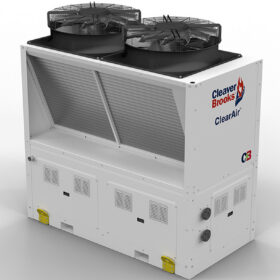
Cleaver-Brooks unveils air-to-water heat pump for hydronic heating
The ClearAir air-to-water heat pump is designed for hydronic heating in residential, commercial, and industrial buildings. Capable of generating hot water up to 80 C with integrated controls, it supports hybrid configurations across diverse applications.
