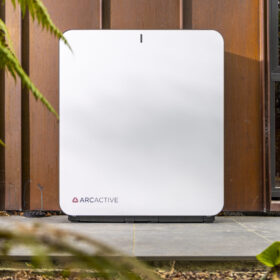
ArcActive targets Australia with ‘re-engineered’ lead-acid battery tech
ArcActive, a New Zealand-based battery tech specialist, plans to set up a factory in Australia within 18 months. It says the facility will be able to produce 30,000 lead acid-based residential energy storage systems per year.
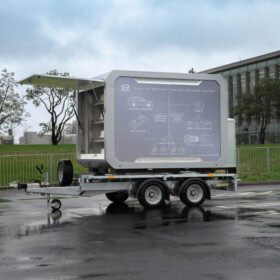
JLR, Allye Energy partner on 270 kWh portable battery energy storage system
Jaguar Land Rover (JLR) and Allye Energy have agreed to collaborate on a 270 kWh portable battery energy storage system (BESS) built with second-life Range Rover batteries. The system, which is set to become the first commercially available BESS with JLR battery packs, can fully charge up to nine Range Rover PHEV vehicles at once.
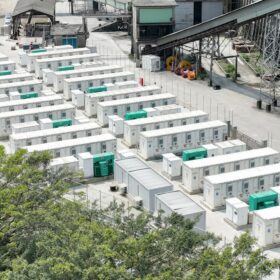
Nhoa Energy commissions battery storage project in Taiwan
Nhoa Energy, an Italian developer, has commissioned a battery energy storage project for Taiwan Cement Group in Yilan county, Taiwan, with a capacity exceeding 120 MWh.
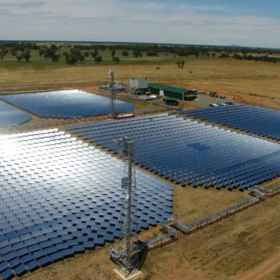
Vast Solar to build 30 MW/288 MWh CSP plant in Australia
Renewables developer Vast Solar has signed a key engineering contract as it pushes toward construction of a 30 MW/288 MWh thermal concentrated solar power (CSP) plant with more than eight hours of energy storage capacity near Port Augusta, South Australia.

System design for PV-driven hybrid EV charging stations
Researchers in India have simulated a 4 kW solar power-based hybrid electric vehicle (EV) charging station using a three-stage charging strategy and found that the station is capable of charging 10–12 EVs with 48 V 30 Ah lithium-ion batteries.
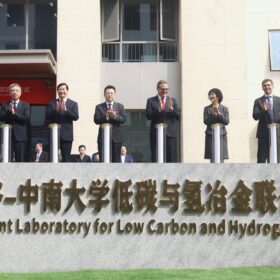
The Hydrogen Stream: Vale opens hydrogen metallurgy lab in China
Vale and Central South University have launched a joint laboratory for low-carbon and hydrogen metallurgy in Changsha, in China’s Hunan province, while Nippon Steel has secured approval to acquire U.S. Steel.
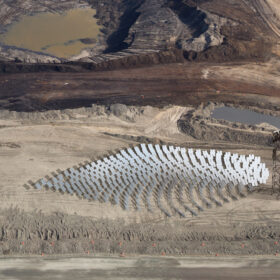
Making the case for concentrated solar power
Dismissed by many in the solar industry as an overly-complex, outdated technology, concentrated solar power (CSP) is set for a comeback thanks to a scaled-down, modular approach.
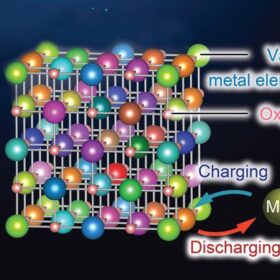
Rechargeable magnesium batteries for grid-scale storage
Researchers in Japan have developed a novel cathode material for rechargeable magnesium batteries (RMBs) in the form of rocksalt oxide. This new material reportedly enables efficient charging and discharging even at low temperatures.

Key takeaways from Advanced Battery Power + V2G conference
Battery research is advancing to address issues in the lithium-ion development process and concerns about safety and aging. Vehicle-to-everything (V2X) tech, meanwhile, is in the starting blocks, but interoperability is the key hurdle to achieving mass market penetration.
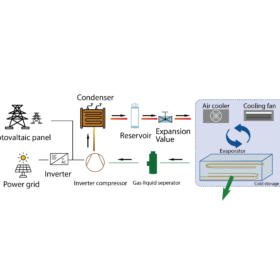
Photovoltaics for cold storage
Researchers in China have developed a photovoltaic cold storage system that is reportedly able to improve refrigeration capacity and ice storage rate. The system is said to ensure a stable cooling system operation for the refrigeration needs of agricultural products.
