
Control, not capacity, could be the next driver of US residential storage investment
Investors are shifting focus from deployment growth to platforms that can orchestrate and monetize battery fleets.

California powers its massive water pumps with 105 MW solar project
California is putting the sun to work on the heavy lift that keeps California hydrated.

Jinko Power enters data center business with 1 GW project in China
Jinko Power signed a framework agreement with Zhongwei to develop a 1 GW data center in Ningxia, marking its entry into green computing under China’s “Eastern Data, Western Computing” initiative. The project, however, remains subject to approvals and funding scrutiny.

A closer look at CATL’s new sodium-ion battery
The battery manufacturing heavyweight presented its latest sodium-ion products at ESIE 2026 earlier this month, expanding its push into grid-scale storage, AI data centers, and long-life applications.
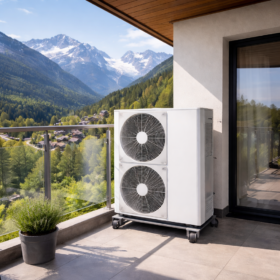
Could global warming improve heat pump efficiency in Alpine regions?
Researchers in Italy analyzed air-to-water heat pump performance in Alpine regions, focusing on how start-up and defrost cycles affect efficiency under current and future climate conditions. Their simulations show that while warmer temperatures slightly reduce defrosting losses and modestly improve efficiency, start-up cycling losses remain significant and continue to limit overall performance gains.
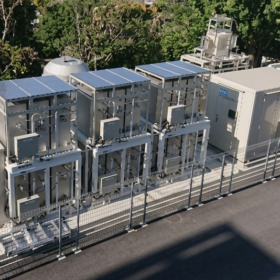
Low-pressure hydrogen bridges seasonal gaps in solar-powered Japanese building
Taisei Corporation has demonstrated that a building can operate entirely on solar power by combining PV generation with a hybrid storage system integrating batteries and low-pressure hydrogen at a test facility in Yokohama. An EMS-enabled setup using lithium-ion batteries and PEM electrolysis balanced short- and long-term energy supply and demand, enabling year-round renewable operation, according to the company.

The Hydrogen Stream: Levelized cost of hydrogen at Mediterranean ports can be as low as €2.5/kg for hybrid systems
A study from the University of Naples Federico II finds hydrogen production at Mediterranean ports could cost €5.7–8.6/kg using only renewables and €2.5–13/kg in hybrid systems, with solar emerging as the most reliable resource and wind outperforming it in select locations. Alongside these findings, major industry developments include new hydrogen and e-fuel projects, advanced electrolyser technologies, and EU-backed infrastructure expansion supporting large-scale decarbonization.
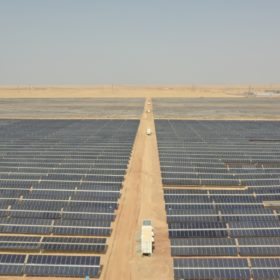
Inside the financing of Egypt’s largest solar‑plus‑storage project
Norwegian developer Scatec ASA has commissioned the first phase of the 1.1 GW Obelisk solar and battery energy storage system (BESS) project in Egypt, backed by $479.1 million in development finance institution (DFI) debt and a fully contracted storage revenue model.
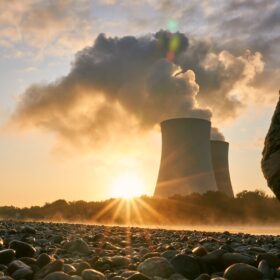
New metric shows renewables are 53% cheaper than nuclear power
A new metric for assessing total system costs puts a least-cost mix of offshore wind and solar at about €46 ($54.20)/MWh in a future climate-neutral energy system for Denmark. Researchers tell pv magazine that figure is less than half the equivalent cost of nuclear under the same conditions.

Thermostatic radiator valves can reduce energy consumption in air-source heat pumps by 6-8%
Researchers in the United Kingdom found that thermostatic radiator valves can reduce air-source heat pump space heating energy use by 6–8% without affecting system efficiency when used correctly. TRVs must be applied carefully in well-designed, balanced systems with at least one open flow path, as they mainly serve as a secondary tool for room-level comfort control rather than a replacement for proper heat pump design and low flow temperature operation.
