
Netherlands approves grid fees for rooftop PV system owners
The competition regulator in the Netherlands says that the grid fees that big energy suppliers are applying to PV system owners are legitimate. Solar customers currently pay between €100 ($107) and €697, depending on the system size.
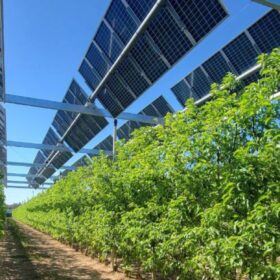
Catalonia sets guidelines for agrivoltaics
The government of the Spanish autonomous region of Catalonia has outlined new requirements to authorize agrivoltaic power generation on agricultural land.
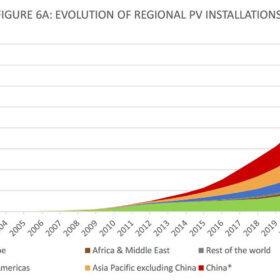
At least 29 countries installed more than 1 GW of PV in 2023
IEA PVPS has published its new “Snapshot of Global PV Markets 2024” report, highlighting key insights and trends. Despite record installations, concerns over profitability and manufacturing dynamics persist, underscoring the need for strategic interventions and policy support to navigate towards a resilient and sustainable PV ecosystem.

IRENA’s 14th assembly underscores role of geopolitics, urgent need for action
The 14th assembly of the International Renewable Energy Agency (IRENA) last week in Abu Dhabi underscored the centrality of geopolitics and security in the current global energy landscape. The gathering also called for greater action to achieve the COP28 target of tripling renewables deployment by 2030.
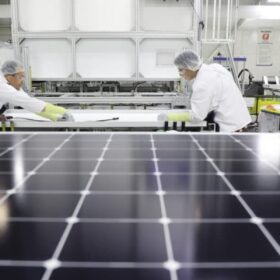
Maxeon sues REC, Hanwha Qcells for alleged TOPCon patent infringement
Maxeon has filed two different lawsuits in the United States against Hanwha Qcells and REC over claims that the two manufacturers used an unspecified tunnel oxide passivated contact (TOPCon) solar cell technology.
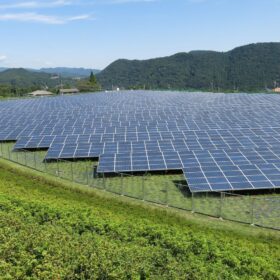
US legal experts dispel 14 false claims about solar, wind, electric vehicles
Columbia Law School has collected and rebutted 33 false claims against clean energy technology as part of its ongoing research on climate change.
EU launches anti-subsidy investigation against Longi, Shanghai Electric
The European authorities are trying to determine whether two consortia – including subsidiaries of Longi and Shanghai Electric – violated the new EU rules on foreign subsidies when they participated in a procurement process in Romania for a 110 MW solar farm. The European Commission is expected to make a final decision within 110 working days.

Underrepresentation of women in solar requires ‘holistic approach’
In the second article of a series, Women in Solar Europe (WiSEu) gives voice to its president, Carmen Madrid. She says the solar and energy storage industries are full of opportunities for women, but a correct path must be set.
European Parliament approves legal requirement to install solar on buildings
Legislation that would require EU member states to integrate solar installations into future building works, and retroactively install PV on buildings, is one step closer to becoming law, after being approved by members of the European Parliament.
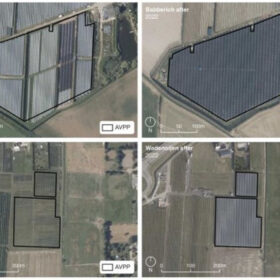
Landscape change indicators for agrivoltaics
Dutch scientists have developed new landscape change indicators (LCIs) for agrivoltaic projects. The novel methodology is meant to assist policymakers and project developers mitigate the visual and environmental impact of agrivoltaic facilities.
