
Insurance premiums trending down despite severe weather threat for solar
Insurance premiums for renewable energy projects in Australia are expected to decrease this year despite natural catastrophe and extreme weather exposures remaining a major concern, particularly for large-scale solar asset owners and investors.

Permitting headwinds, geopolitics drive North American solar PPA prices higher in Q1
A report from LevelTen Energy finds North American solar PPA prices rose 4.6% in the first quarter of 2026 as developers navigate a complex regulatory and geopolitical environment.
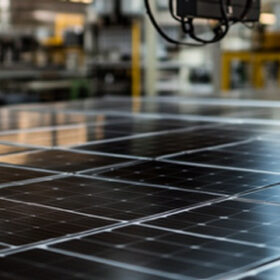
Tandem PV launches commercial perovskite-silicon manufacturing in California
Tandem PV has opened a 40 MW commercial demonstration factory in Fremont, California, marking a significant transition for perovskite-silicon technology from laboratory development to repeatable manufacturing at scale.

California powers its massive water pumps with 105 MW solar project
California is putting the sun to work on the heavy lift that keeps California hydrated.

Philippines adds 899 MW of solar in 2025
Figures from the International Renewable Energy Agency say the Philippines’ cumulative solar capacity neared 3.9 GW by the end of last year. Deployment rates look set to increase in the coming years, led by a gigawatt-sized pipeline of projects procured under the country’s green energy auctions.

Jinko Power enters data center business with 1 GW project in China
Jinko Power signed a framework agreement with Zhongwei to develop a 1 GW data center in Ningxia, marking its entry into green computing under China’s “Eastern Data, Western Computing” initiative. The project, however, remains subject to approvals and funding scrutiny.
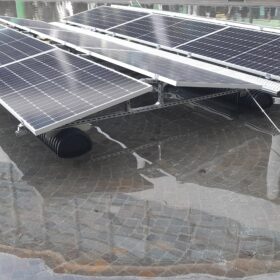
Italy launches tender for 30 MW of floating PV
The Italian authorities will offer 30 MW of floating PV capacity in its June 8 FER2 auction, reducing the quota after weak participation in the first round.
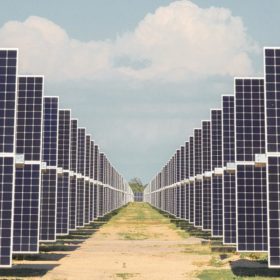
Negative power prices reach all-time high on the Iberian Peninsula in Q1
Spain and Portugal recorded a surge in negative electricity prices in Q1, driven by strong solar generation and relatively low demand on the Iberian Peninsula. Further records are likely in 2026 as solar capacity grows, with more frequent price volatility expected across Europe.

Solar rebound effect could raise Europe’s electricity demand 5% by 2050
Research from Germany’s FernUniversität Hagen finds the solar rebound effect, caused by households increasing their total electricity consumption after installing a solar system, is currently a blind stop in Europe’s energy system planning and abatement scenarios.

Community-scale solar offers $6.5 billion in savings, bypassing California gridlocks
Localized distribution-level projects can cut out-of-state energy imports by 13% while providing a faster alternative to delayed transmission-scale infrastructure, said a report by Pathfinder Communications.
