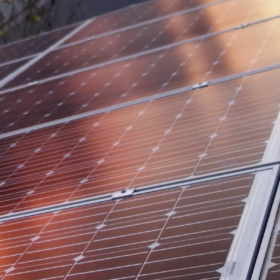
Solar, mining groups partner to improve mineral traceability
The Solar Stewardship Initiative (SSI) and the Initiative for Responsible Mining Assurance (IRMA) have signed an agreement to strengthen traceability and sustainability standards across solar supply chains.

‘Photovoltaics are, first and foremost, about energy security’
In an interview with pv magazine, Carolina Novac, Secretary of State at Moldova’s Ministry of Energy explains how the country raised its solar capacity to 1 GW while advancing wind, storage, and regulatory reforms to strengthen energy security and reach 30% renewables by 2030. The Moldovan government is now focusing on scaling BESS, modernizing the power market, and enhancing cybersecurity through stronger policies and international cooperation.
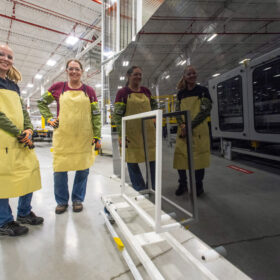
US solar module prices face upward pressure
Median solar module pricing in the United States reached $0.28 per watt as the market adjusted to intensified trade enforcement and new Foreign Entity of Concern compliance requirements, according to the Q1 2026 Quarterly Pricing & Domestic Content Report from Anza.
Electrification alone may not shield firms from gas-linked prices
With electricity markets still tied to natural gas in many regions, battery storage is emerging as a tool to manage price volatility and reduce exposure to grid-driven risks.
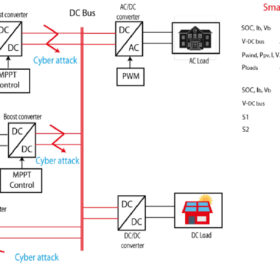
All emerging cyber threats targeting power infrastructure at a glance
Researchers in Moroco analyzed cybersecurity challenges in smart grids, highlighting AI-driven detection and defense strategies against threats like distributed denial-of-service, false data injection replay, and IoT-based attacks. They recommend multi-layered protections, real-time anomaly detection, secure IoT devices, and staff training to enhance resilience and safeguard power system operations.

New Time targets large-scale perovskite production in Italy
New Time has outlined a four-year roadmap to industrialize perovskite solar cells in Italy, with pilot production planned within three years and full-scale output to follow.
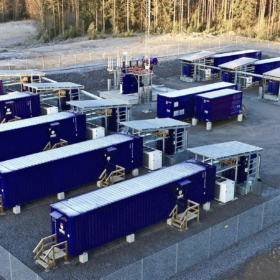
Neoen unveils large-scale battery projects in France, Japan
Neoen has announced two battery energy storage system (BESS) projects in France and Japan, expanding its footprint in both markets with installations totaling 348 MW and 896 MWh.

Chinese PV Industry Brief: Sungrow storage overtakes inverters in 2025
Sungrow says energy storage systems overtook PV inverters as its largest business segment in 2025, as the company posted double-digit revenue and profit growth.
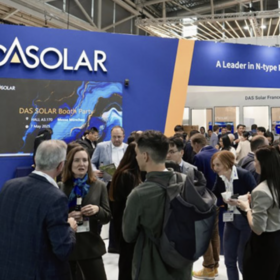
TCL Zhonghuan to acquire control of DAS Solar in consolidation move
TCL Zhonghuan has agreed to take majority control of Chinese solar manufacturer DAS Solar, a producer of advanced n-type modules based on tunnel oxide passivated contact (TOPCon) and back-contact (BC) technologies.

Malaysia’s solar capacity surpasses 5.7 GW
Reports from the International Energy Agency’s Photovoltaic Power Systems Programme (IEA-PVPS) indicate Malaysia added over 1.4 GW of solar in 2025, with more than 5.7 GW now deployed across multiple government schemes.
