
RWE drops 99.9 MW solar project in Wales on grid constraints
RWE has scrapped its 99.9 MW Butterfly solar‑plus‑storage project in Wales after determining that grid connection availability made it unviable, in a move that comes amid sharply rising connection demand and mounting pressure on the United Kingdom’s queue reform process.

Silver demand from PV industry expected to drop 19% this year
A new report from Metal Focus reveals that global silver market remains structurally tight, with elevated prices, a fifth consecutive annual supply deficit in 2025, and ongoing mine and recycling constraints despite modest production growth. At the same time, PV-driven silver demand is falling sharply due to cost pressure and thrifting.
European power grid investment set to rise sharply by 2027
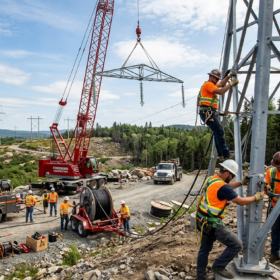
The EU Agency for the Cooperation of Energy Regulators (ACER) says distribution grid investment has risen 51% since 2021, but warns that fragmented planning rules and regulatory distortions could limit efficiency and slow the energy transition.

Togo opens solar minigrid tender
The government of Togo is running a tender for the construction of solar minigrids in 27 rural localities. The deadline for applications is May 26.
France, Germany set daily solar records for April
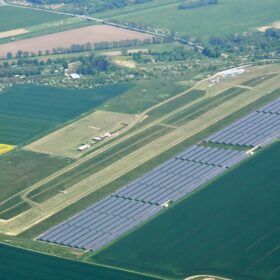
AleaSoft Energy Forecasting’s latest analysis finds increased solar energy production and lower gas futures prices helped reduce electricity prices in most major European markets last week. Germany produced 426 GWh of solar on April 8, a record for a day in April. France also set a new April day record a day later, generating 136 GWh.

Free midday electricity key to drive consumer demand to match excess PV generation
Free midday electricity schemes aim to shift household demand into periods of high solar PV generation, reducing midday surplus and evening fossil-fuel ramp-up. Research on Australia’s Solar Sharer program suggests such incentives could significantly improve renewable utilization, but outcomes depend on consumer behaviour, load shifting, and rebound effects.

Tunisia launches 200 MW call for PV projects under new licensing scheme
The Tunisian government is inviting private developers to submit applications for solar power plants under the sixth licensing round for full electricity sale to national utility STEG.
Vertical bifacial PV outperforms tilted PV systems in the UK
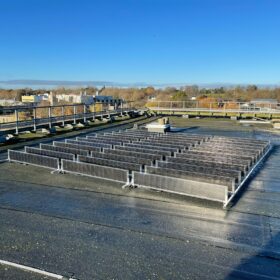
A year-long study in the UK finds vertical bifacial PV systems achieve an up to 26.91% higher output during morning hours compared to traditional tilted PV systems. The vertical bifacial system bettered the tilted system across all four seasons, with average power gains as high as 24.52% during winter.
Australian developer moves ahead with modular green hydrogen production plant
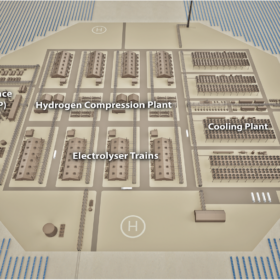
Intercontinental Energy, the company driving two of Australia’s largest renewable energy projects, has announced key milestones for the system architecture that is to serve as the backbone for the proposed giga-scale green hydrogen projects.
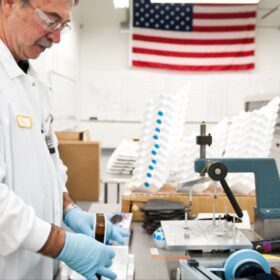
Suniva to build 4.5 GW solar cell factory in South Carolina
The expansion will bring the company’s total domestic cell capacity to 5.5 GW, cementing its position as the largest merchant solar cell manufacturer in the United States.
