Solargiga’s unaudited Jan-Sept revenue spikes 11% on year
The Hong Kong-based solar manufacturer appears to have posted impressive revenue gains this year, based on preliminary, unaudited operating results for the first three quarters of 2019. But as the troubled company continues to pin its hopes on a much-anticipated turnaround in Chinese solar demand, its long-term outlook remains uncertain, mere weeks before the scheduled de-listing of its shares in Taiwan.

EnBW to start building subsidy-free, 175 MW solar plant in Germany in early 2020
The German utility has finalized its investment plan for the massive PV array, which will be built in the state of Brandenburg from the start of 2020. It first announced the project — the largest subsidy-free PV plant under development in Germany thus far — back in the spring.
AC Energy, UPC Solar set up new Asia-Pacific joint venture
Philippines-based AC Energy will work with UPC Solar Asia Pacific – the solar energy unit of Hong Kong-headquartered UPC Renewables – to build more than 1 GW of solar in the coming years, with an initial focus on Asian markets such as India, South Korea and Taiwan.
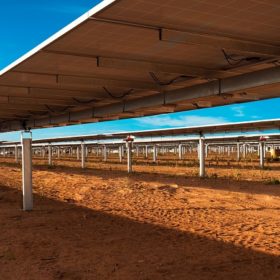
DuPont on the hunt for Aussie field survey partners
Over the last decade, DuPont has surveyed more than 2 GW of PV installations and has analyzed a range of failure types and their causes. Hong-Jie Hu, DuPont’s solar technical and development lead in China, says that the materials giant is looking for Australian partners for its Global Field Survey program, with a particular interest in hot and humid and desert environments.
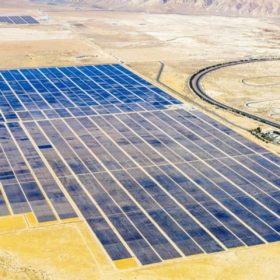
8minute, Capital Dynamics complete massive Springbok PV project in California
The 121 MWdc Springbok 3 project in Kern County, California, brings the Springbok series to 448 MW, as Capital Dynamics continues its investments in U.S. solar.

Cronimet finishes 1 MW rooftop PV array on Namibian mall
The German developer and independent power producer claims it finished its latest solar project in the country about one month ahead of schedule.

AEPPL signs $689.7m deal for li-ion battery plant in western India
Automotive Electronics Power Private Ltd. (AEPPL), an India-based lithium-ion battery manufacturing venture between three Japanese companies, aims to produce 30 million cells per year by 2025.

EU electricity market summary shows shift from coal to gas
A newly published overview of the European electricity sector suggests that renewables development remains stalled on the continent. Despite some regional differences, EU policy generally favors gas over renewable resources to replace coal. And recent comments by Kadri Simson, the newly sworn-in EU energy commissioner, offer little hope for change.
India issues bidding guidelines for solar-wind hybrid projects
India’s Ministry of New and Renewable Energy has suggested minimum 25-year power purchase agreements, while also opening up the option to include energy storage in solar-wind hybrid generation projects that are procured under its public tender regime.
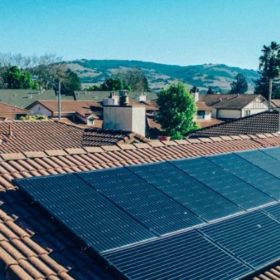
Solar + storage to survive disasters
Roth Capital Partners expects the U.S. residential storage market to grow more quickly than expected. The prediction is founded just as much in disaster mitigation as it is in economic viability.
