
Panda Green shareholders to vote on latest $225m state bail-out plan
It is back to the meeting room for beleaguered shareholders in the debt-saddled solar project developer, ahead of a proposed shares purchase by a Chinese coal and real estate company.
China walks away from state bail-out of GCL solar project business
The proposed acquisition of a controlling stake in the heavily-indebted PV project business of solar manufacturer GCL-Poly has fallen through, with state-owned China Hua Neng now proposing to cherry-pick the more attractive assets from the unit’s 7 GW portfolio.
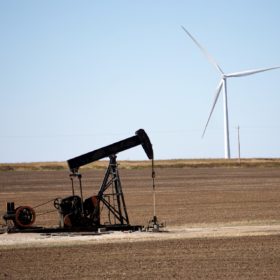
Fossil fuel dependence and poor governance? Fasten your seatbelts
A study of the after-effects of the energy transition has assessed 156 nations and ranked a surprising winner. Here, energy expert Indra Overland discusses the findings of the GeGaLo Index as part of our interview examining renewables and geopolitics.

Chinese manufacturer TBEA to open inverter gigafactory in India this month
The Chinese company plans to roll out 2 GW of inverters per year from a facility which will have 1 GW production lines for both central and string products.
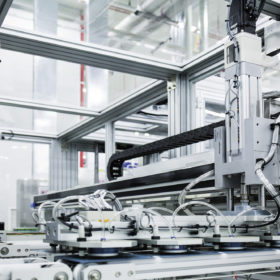
South Korea’s roadmap to drive down solar costs
The government has unveiled a plan to help the PV industry reduce the cost of solar panels from around $0.23/W to $0.10/W by 2030. The plan also aims to reach module efficiencies of around 24% – up to 35% for multi-junction cells – by the end of the next decade.

Mounting interest in gravity-based storage solutions
Austrian researchers have proposed gravitational energy storage for locations with low demand. The scientists claim the system they are suggesting can be combined with other forms of storage as well as renewables, costs $50-100 per megawatt-hour of stored energy and $1-2 million per megawatt of installed capacity to develop.
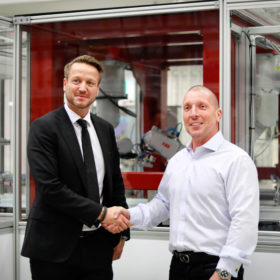
Exeger and ABB to build ‘light harvesting material’ fab in Sweden
Swedish company Exeger says the dye-sensitized ‘light-harvesting material’ it will produce at its facility will generate enough power to prevent the need to recharge portable electronic devices, lengthening battery lifespan perhaps indefinitely.

Chinese module makers land another two big overseas orders
GCL and Canadian Solar provide further proof of the solar boom that is gathering pace around the world even as attention focuses on the Chinese market.
Chinese recovery will begin before year-end, according to Jinko
The Shanghai solar manufacturer has revealed another set of record-breaking quarterly figures and says it will shift 18-20 GW of modules in 2020, en route to generating revenues of $1.17-1.23 billion.
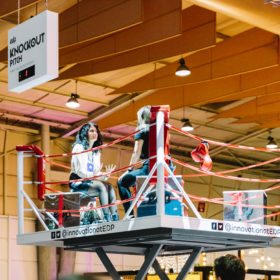
EDP: ‘PV will be one of the most dominant sources of power generation’
Portuguese electricity and gas company EDP used the 2019 Web Summit event as an opportunity to undermine the role of fossil fuels.
