
Solar secures just 5 MW in Italy’s first 500 MW renewables auction
Only one 5 MW solar project was selected in the 500 MW auction, while wind project developers secured the remaining 495 MW. Final price for the selected solar park was €60/MWh.
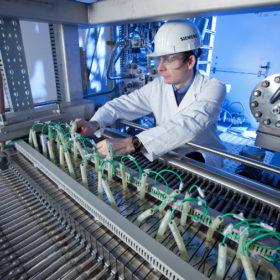
Green hydrogen costs projected to decrease by up to 60% by 2030
A new report from Hydrogen Council predicts that the cost of renewable hydrogen production will fall drastically by up to 60% over the coming decade due to the declining costs of renewable electricity generation and the scaling up of electrolyzer manufacturing. Thanks to its optimal renewable resources, Australia will be among the countries most favorably placed to contribute to the development of the hydrogen economy.
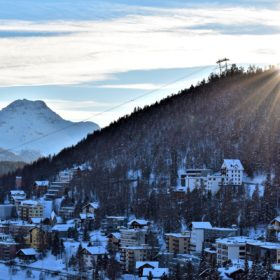
Switzerland increases net metering tariff for rooftop PV
Swiss renewable energy association VESE has reported an average 4% increase for owners of PV systems not exceeding 10 kW in size. However, the remuneration continues to vary widely between the 30 largest network operators in the country.

Japan’s fifth solar auction delivers final lowest price of $0.10/kWh
Only 39.8 MW of PV projects were allocated in the fifth round of Japan’s procurement program for large-scale solar. The lowest price offered was ¥10.99/kWh ($0.10) and the highest ¥13.0, for an average price of ¥12.57.

Spain reaches 8.7 GW of cumulative solar
The country saw the addition of 3.975 GW of new solar installations last year. Most of this capacity comes from solar projects selected by the Spanish government in the renewable energy auction held in July 2017.

ERA-Net awards 23 future energy pilot projects across Europe
Under the umbrella of the European Union’s Horizon 2020 initiative, the research platform ERA has initiated a new batch of future energy projects. Looking at the list of winning projects, it is easy to tell that hydrogen, virtual power plant, and blockchain projects are really at the center of what Europe thinks will be important for its net-zero carbon plans by 2050.
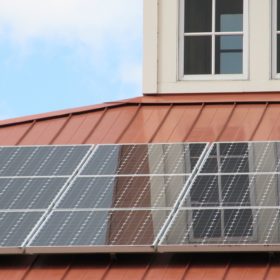
Vietnam confirms 20-year FIT for rooftop PV will be maintained at $0.0935/kWh
The generous tariff is considered crucial by the Vietnamese government to maintain high levels of development in the rooftop segment until 2021.

Benin introduces VAT exemption on imports of PV panels
The exemption will be applied to the import of materials, equipment and installation accessories for the deployment of PV and solar thermal systems. The new measure is aimed at increasing access to electricity through more off-grid projects.

Panda Green settles $350m notes with hours to spare
The debt-saddled developer now has to hope its latest, $230 million state bail-out goes ahead before summer or it will be left $260 million in hock to its Beijing-owned main shareholder.
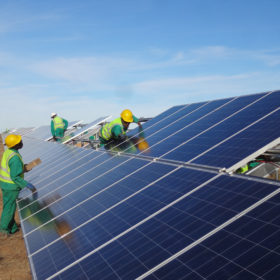
Scatec Solar swung from profit to loss last year
The Norwegian solar developer has gone from a $15.5 million profit at the end of 2018 to a $4.33 million loss just as its project co-financiers banked $21.5 million.
