
Falling battery costs to push solar, wind to 50% electricity generation by 2050, but electricity still failing CO₂ reduction targets – BNEF
Solar PV capacity is set to grow 17-fold, and wind six-fold, by 2050, to account for nearly half of global electricity generation, predicts BNEF, while investments will reach US$11.5 trillion. Cost reductions will drive this charge, particularly in the battery market, which will benefit from the EV manufacturing ramp up. Despite this, the electricity sector is still failing to bring CO₂ emissions down to the required levels, with its continued dependence on gas.
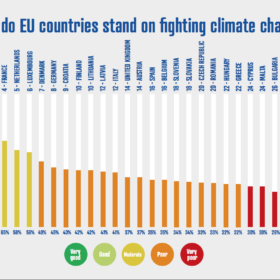
Most EU countries fail to work towards climate goals – CAN Europe
According to a new report released by Climate Action Network (CAN) Europe, no single EU country is performing sufficiently in both showing ambition and making progress in reducing carbon emissions, thus casting a long shadow over the Paris Agreement objectives. Sweden is leading the charge in fighting climate change, followed by Portugal and France.
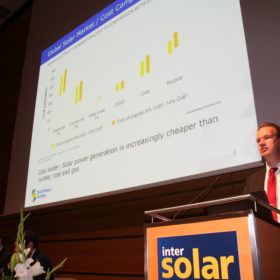
Global PV market to grow by another 621.7 GW by 2022, SolarPower Europe says
Global newly installed capacity for 2018 is forecast to reach 102.6 GW, of which “only” 39 GW are expected to come from China. Fourteen countries are expected to cross the GW threshold this year.
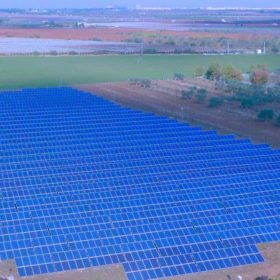
Residential, commercial PV drives solar demand in Italy
Solar has covered 5.8% of Italy’s power demand so far this year. Newly installed PV capacity for the first four months of this year, meanwhile, has reached 116 MW, around 6.4% up from the same period in 2017.
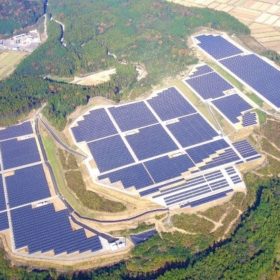
Japanese government must be more unified in pursuit of PV goals — report
The Japanese government is steadily working toward the release of the country’s fifth strategic energy plan, but it needs to work with the private sector more effectively to promote the deployment of solar over the coming decades, according to a new report.
Netherlands to replace net metering with new scheme for residential, commercial PV
Under the new scheme, set to come into force in 2020, homeowners and small businesses investing in solar and other renewables can expect a payback period of around seven years. They will also be exempt from paying energy taxes and the ODE (Opslag Duurzame Energie), a levy on power consumers that finances the country’s renewable energy programs, for self-consumed electricity,

Mexico eliminates 15% customs duties on solar module imports
Mexico’s Federal Court of Fiscal and Administrative Justice has accepted an appeal lodged by the Mexican solar association, Asolmex, to remove the 15% customs duties applied to imports of solar PV modules.

The weekend read: Signs of life
European markets: Growth in solar installations returned to European shores in 2017, with some of the usual suspects posting big numbers, and several new players awakening to the possibilities of PV. Here, pv magazine provides an overview of the latest movements on the continent.
Is SoftBank’s $100 billion investment in Indian solar realistic?
While news of Japan’s SoftBank announcing up to USD 60-100 billion investment in India’s solar PV power generation is creating ripples across the industry circles, industry analysts feel that the committment sounds unrealistic in view of India’s current PV market status and future needs.

India saw more utility-scale PV tenders in Q1 2018 than in entire 2017 – Bridge To India
India saw the issuance of 13 new utility-scale solar PV tenders totaling 11,945 MW in the quarter ending March 31, 2018, which is 68% more than in the entire of 2017. However, tender capacity for rooftop solar PV (greater than 1 MW in size) was down 50%, at 102 MW.
