
Kosovo raises 2020 solar target, slightly
The Kosovar Ministry of Economic Development has recently announced a plan to transfer 100 MW to 120 MW of licenses from hydro, to solar and wind. The latter, however, is expected to comprise the largest share, according to the country’s revised plans for renewables and energy, which envisage just 30 MW of solar by the end of 2020.

A renewable world order
In the first in a series of interviews on the topic of renewable energy and geopolitics, Indra Overland, head of the Center for Energy Research (NUPI) and Member of the Research Panel, Global Commission on the Geopolitics of the Energy Transition at IRENA, discusses the effects a greater penetration of solar, and other renewable energies, in the global energy mix, could have on world order. Although fossil fuels will continue to play a dominant role in the coming years, sooner or later the geopolitics of energy will cease to be that of gas and oil, according to Overland. Although it is still difficult to predict future scenarios, he believes renewables have the potential to make nations more energy independent, and provide the basis for more peace and stability.
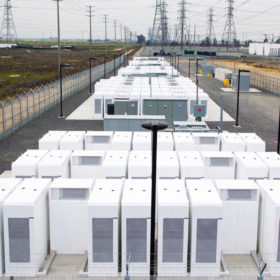
Nevada, US primed for up to a gigawatt of energy storage
A report by the Brattle Group for Nevada regulators suggests that by 2030 – depending on pricing – 700 to 1,000 MW / 2.8 to 4 GWh worth of energy storage could be cost-effectively deployed statewide.

TOPCon: The next big thing after PERC
TOPCon technologies could further increase solar cell efficiencies, said Guangyao Jin, chief scientist, DuPont Photovoltaic Solutions, at this year’s Energy Taiwan, held in September. He added that metallization paste is crucial.

Qatar pre-qualifies 16 bidders for 500 MW solar tender
Among the pre-selected bidders are big European players, such as Enel, Total and Engie, and big solar manufacturers including JinkoSolar, Hanwha Q Cells and GCL. Further bids have come from big Japanese conglomerates, and companies from Spain, Germany, South Korea and Turkey. The first 350 MW phase of the large-scale solar park is expected to come online by the end of 2020.
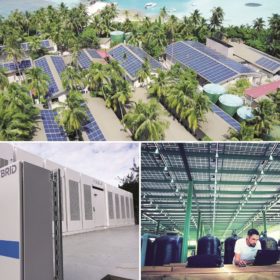
The weekend read: Decision-making through data
According to a study conducted by Massachusetts Institute of Technology, companies that use data-driven decision-making are 5% more productive and profitable than their competitors. Jean-Yves Bellet, cofounder and VP-CTO of QOS Energy asks,“Can we apply the results of this study to solar PV operations and maintenance?” Today, solar plant owners expect to generate value from their data using real-time decision-making tools, analytics, and machine learning models.

Farewell to Spain’s solar tax
The Spanish Cabinet has approved a royal decree, which introduces a package of urgent measures to boost the country’s energy transition. It includes the already announced elimination of the “sun tax”, and other important measures, such as compliance with renewable energy objectives, electric vehicle adoption, reduced electricity prices, a social bonus for heating, consumer protection measures, and the extension of an electric social bond.

Global Solar Council announces new board, mission
The Global Solar Council (GSC) held its general assembly at last week’s Solar Power International (SPI) in California, where it announced new board members and said it will work towards crafting a unified message for the solar industry. All five working committees of the council are expected to contribute to this new task.

Saudi Government refutes claims 200 GW solar project has been scrapped
Responding to recent news reports that Saudi Arabia had abandoned its very ambitious plans to install 200 GW of solar PV by 2030, the country’s Ministry of Energy, Industry and Mineral Resources (MEIM) issued an official statement saying that the plans are still on track. It also outlined three components of a new power sector transformation plan.

Taiwan on track to meet 20 GW goal, upstream turns downstream
EnergyTrend has released a report suggesting that Taiwan is on its track to meet the target of building 20 GW solar PV by 2025. While decreasing module prices makes it easier for investors and stakeholders to achieve this goal, Taiwan’s module manufacturers are struggling to compete with the price developments this year. Many companies in Taiwan will, therefore, turn their eyes to the downstream market, the report claims.
