
India adds 10.4 GW of solar in FY 2017-18, Karnataka leads the way
The Indian solar PV market saw 10.4 GW of new capacity added in the 2017-18 financial year, says Bridge to India, thus bringing cumulative installations to 24.4 GW as of this March. Leading the charge is the state of Karnataka. Concerns over the industry’s development remain, however.

REC Group launches new half-cell solar module
At last week’s Intersolar Europe show in Munich, Norwegian headquartered manufacturer REC Group unveiled its latest module innovation, the N-peak series. The new solar PV modules will be the first to combine n-type, mono-cSi and half-cut cell technologies.
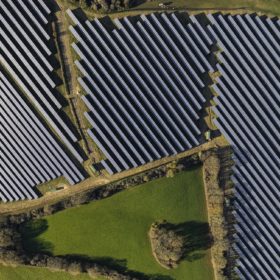
Global PV market to diversify, reach 200 GW a year by 2020
According to a new report from the PV Market Alliance (PVMA), the global solar PV market will only be marginally affected by the recent China policy decisions, and will grow to become an up to 200 GW market by 2022. Diversification will continue, with new segments accounting for up to 25% of the entire market by this time.
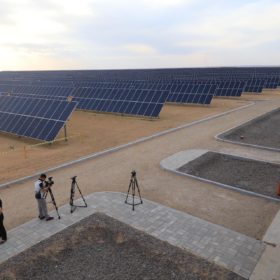
Mongolia’s largest solar park comes online
The 15 MW solar PV plant was built by a Japanese consortium led by Sharp, in the Economic Development Zone of Zamyn-Üüd, in the province of Dornogovi.

The weekend read: Heads you win, tails you win
One manufacturer after another has announced bifacial modules, and buyers would do well to consider the benefits. Independent calculations show that increases of up to 15% or more are realistic in countries such as Germany.
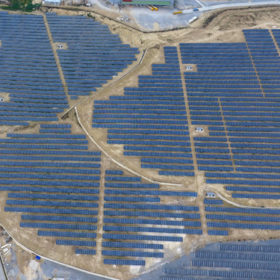
Turkey: ‘Localisation’ trend dominates the energy sector
Turkey is going to the polls on Sunday, and many wonder whether president Recep Tayyip Erdoğan’s gamble on a snap election could backfire. Unless there is a shock at the ballot box though, the nation’s energy sector trends are unlikely to be challenged.

Suntech announces panel supply deal for Australia projects
Former manufacturing giant establishes a foothold in the promising Australian market, and says it is in talks with developer Biosar about supplying further modules for projects in the nation.

India moots world’s largest solar tender – of 100 GW
If implemented, the huge tendering exercise would dwarf anything that has gone before it. Minister explains bidding will also include solar manufacturing and storage elements.

Global PV module prices collapse
The predicted fall in global PV module prices appears to have already begun, with PVInsights and EnergyTrend reporting average prices in the $0.27-$0.37/W range.

International investors provide $34 million for solar plant in Zambia
The Ngonye project proposed by Italian energy giant Enel Group and Zambia’s Industrial Development Corporation, will be financially underpinned by senior loans of up to $10 million from the International Finance Corporation, up to $12 million from IFC-Canada Climate Change Program and up to $11.75 million from the European Investment Bank.
