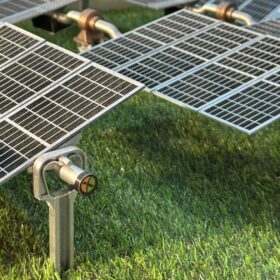
PV could outcompete agriculture in Spain within 20 years
Scientists have analyzed the competition between photovoltaics and agriculture for land use in Spain by studying 134 different crops in 15 regions. Using a real options framework, they found that falling solar PV costs and high irradiance in southern Spain could make solar more profitable than farming by the mid-2040s, highlighting growing land-use competition.

Brazil eyes gigawatt-scale energy storage growth in 2026
The Brazilian Association of Energy Storage Solutions (ABSAE) predicts that installations in Brazil’s commercial and industrial (C&I) segment should exceed 2 GWh in 2026. In addition, the group expects procurements of approximately 8 GWh in the auction scheduled for April, which will procure projects for delivery from 2028.

India tenders 2.45 GW solar power projects with battery storage
Rajasthan Solar Park Development Co. Ltd. (RSDCL) has issued a tender inviting bids to develop 2,450 MW of state transmission utility (STU)-connected solar PV capacity paired with 1,600 MW/6,400 MWh of battery energy storage systems at the Pugal Solar Park in Rajasthan’s Bikaner district. The projects will be implemented on a build-own-operate (BOO) basis.

Canadian Solar wins U.S. patent litigation against Maxeon
The patent infringement case was related to an unspecified TOPCon solar cell technology.

PPA signed for Saskatchewan’s largest solar project
A 157 MW solar project, set to be the largest in the Canadian province of Saskatchewan, will be built following the signing of a power purchase agreement between French developer Neoen and the provincial utility. The project will be co-owned by four Treaty 4 Nations.

The eyes and ears of the power grid
Sensors are an indispensable tool to inform utility managers of the state of the electricity grid and the occurrence of disruptions of any kind. The IEC provides the standards and conformity assessment that enable them to operate safely and efficiently.
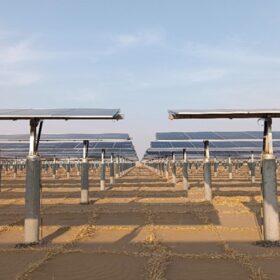
MENA region installs 12.2 GW of solar in 2025
Latest report from energy think tank Dii Desert Energy says that with the Middle East and North Africa’s project pipeline of renewables now standing at 202 GW, solar is likely to drive the region past its aggregated national ambitions for renewables of 235 GW by 2030.
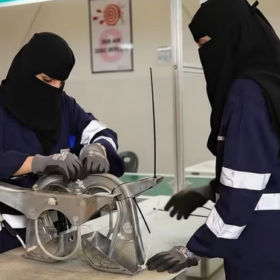
Nextpower, Abunayyan to build 12 GW solar tracker factory in Saudi Arabia
The factory will be located in Jeddah and supply solar trackers across Saudi Arabia and the MENA region.
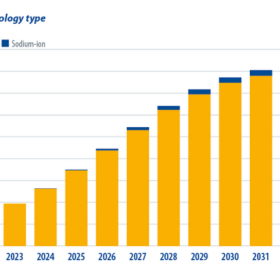
Why sodium-ion can’t yet challenge lithium-ion’s reign
A new generation of sodium-ion (Na-ion) battery cells has been launched as an alternative to the virtual monopoly of lithium-ion (Li-ion). Although the technology is unlikely to displace significant Li-ion market share, recent improvements make Na-ion a viable solution for certain niche applications, with potential for wider usage if cost becomes competitive.

Hybridization: The new paradigm for a more resilient and competitive renewable market
One of the main benefits of hybridization is the ability to offer more attractive and stable energy products to clients. A hybrid PPA better covers consumption needs, reduces risks associated with the variability of a single source, and allows for more competitive long-term pricing, writes Rodrigo López, head of revenues at BNZ.
