
Free midday electricity key to drive consumer demand to match excess PV generation
Free midday electricity schemes aim to shift household demand into periods of high solar PV generation, reducing midday surplus and evening fossil-fuel ramp-up. Research on Australia’s Solar Sharer program suggests such incentives could significantly improve renewable utilization, but outcomes depend on consumer behaviour, load shifting, and rebound effects.

Tunisia launches 200 MW call for PV projects under new licensing scheme
The Tunisian government is inviting private developers to submit applications for solar power plants under the sixth licensing round for full electricity sale to national utility STEG.
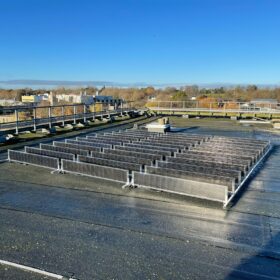
Vertical bifacial PV outperforms tilted PV systems in the UK
A year-long study in the UK finds vertical bifacial PV systems achieve an up to 26.91% higher output during morning hours compared to traditional tilted PV systems. The vertical bifacial system bettered the tilted system across all four seasons, with average power gains as high as 24.52% during winter.
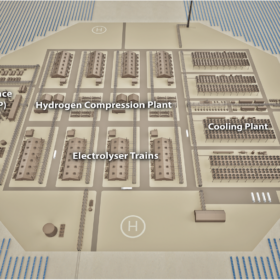
Australian developer moves ahead with modular green hydrogen production plant
Intercontinental Energy, the company driving two of Australia’s largest renewable energy projects, has announced key milestones for the system architecture that is to serve as the backbone for the proposed giga-scale green hydrogen projects.
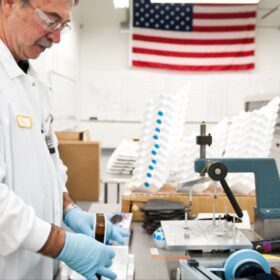
Suniva to build 4.5 GW solar cell factory in South Carolina
The expansion will bring the company’s total domestic cell capacity to 5.5 GW, cementing its position as the largest merchant solar cell manufacturer in the United States.

Omani company to build 500 MW of solar in Botswana
Oman’s Naqaa Sustainable Energy LLC is set to design, finance, construct and operate a 500 MW solar project in northwestern Botswana. A groundbreaking ceremony is scheduled to take place later this week.
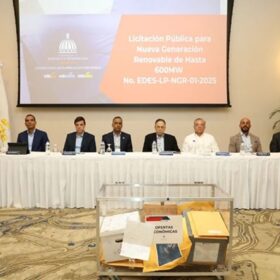
Dominican Republic opens bids for 600 MW renewables tender
The nation’s latest call for long-term power purchase agreements focuses on supplying the national grid with wind and solar projects, specifically mandating integrated battery storage systems to ensure grid resilience.
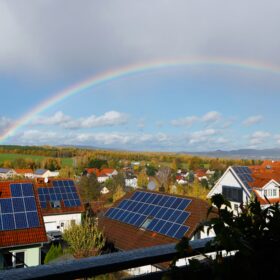
Household solar is easier said than installed
Analysis of longitudinal survey data has explored the link between intended and actual solar panel adoption in UK households. It finds that while most households that had intention of installing solar in 2012-13 were yet to do so by 2021-22, serious intention to install solar still increases the likelihood of adoption more than other factors such as income and environmental perceptions.

Mexico updates distributed generation rules to formally integrate energy storage
The new provisions published by the country’s energy regulator are aimed to adjust the technical and administrative criteria for distributed generation, particularly with regard to energy storage, installed capacity limits, and interconnection procedures.
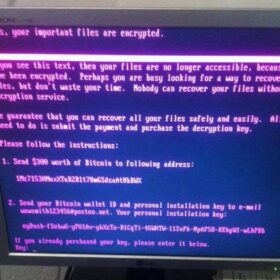
Cyber threats for PV: What are ransomware attacks and how do they work
Ransomware attacks encrypt or lock critical PV system data and control platforms, preventing operators from accessing or managing their assets until a ransom is paid. These attacks can disrupt operations, reduce energy production, and create safety risks, making robust backups, segmentation, and incident response essential for resilience.
