
European developers signed 19 PPAs for 630 MW in September
Swiss-based analytics firm Pexapark recorded 19 power purchase agreements (PPA) in Europe this September, as PPA prices across most major European markets fell month-on-month.

New Zealand approves 200 MWh solar-plus-storage project
A 179 MW solar-plus-storage project near Auckland has secured approval from an independent panel, allowing a commercial decision if the project remains viable under the imposed build and operating conditions.
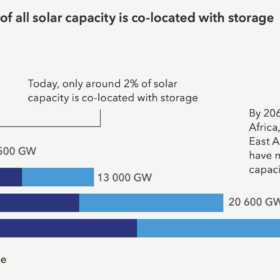
Nearly half of solar capacity will be co-located with storage by 2060, says DNV
DNV’s Energy Transition Outlook 2025 report also predicts that distributed generation solar should begin outpacing utility-scale installations in some parts of the world by 2060. It adds that the levelized cost of electricity for solar is beginning to plateau and is expected to slow to an annual drop below 1% by the 2050s.

DR Congo provides grants for minigrids, solar home systems
The Mwinda Fund is aiming to distribute $500 million in grants for minigrids, solar home systems and clean cooking solutions in DR Congo by 2030. It is already backed by $65 million in funding from the World Bank and $7 million from the Global Energy Alliance for People and Planet.
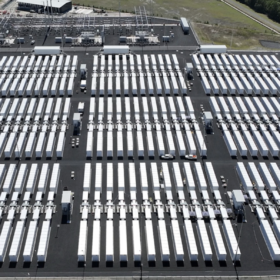
Australia becomes world’s third-largest utility battery market
Australia has overtaken the United Kingdom to rank behind China and the United States in utility-scale battery capacity, with 14 GW/37 GWh of projects at or nearing financial close.
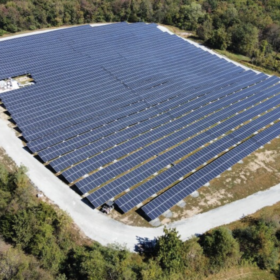
TotalEnergies turns closed US landfill into 7 MW solar plant
TotalEnergies has completed a 7 MW solar project on a closed landfill in Baltimore, Maryland, using specialized ballasted racking to install more than 15,000 panels expected to meet 11% of the local government’s electricity use.
Optimizing solar-plus-storage operation for markets with imbalance penalties
Scientists in Japan have used a deep reinforcement learning–based AI model to calculate discrepancies between the planned and actual electricity supply volumes in PV-battery systems operating in markets where grid imbalances are penalized. Through a series of simulations, they found that the proposed methodology can reduce imbalance penalties by approximately 47%.

Romania drafts cybersecurity rules for PV, cogeneration up to 1 MW
Romania plans to amend its energy law to require the National Cybersecurity Directorate (DNSC) to define technical standards for PV and cogeneration systems up to 1 MW, aimed at preventing data breaches and safeguarding grid operations.
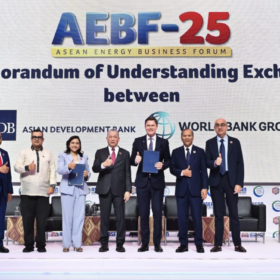
ADB, World Bank commit $12.5 billion to ASEAN Power Grid plan
The Asian Development Bank (ADB) and World Bank have launched a $12.5 billion initiative to finance regional power interconnection in Southeast Asia under the ASEAN Power Grid program.

Energy storage reshapes data center siting amid US regulatory pressure
Power cut regulations and slow permitting are driving US data centers toward storage-backed, grid-independent designs.
