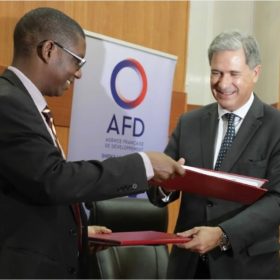
French government finances 150 MW solar project in Tanzania with €130m
The solar facility is intended at reducing the country’s dependency on hydropower, especially during drought periods.
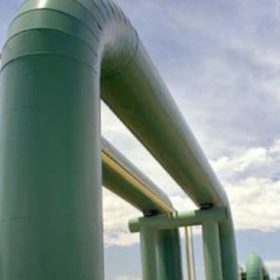
Industrial green hydrogen could become a global commodity but local production is needed for transport uses
Long distance, point-to-point transport of green hydrogen for industrial use can harness the cheap solar electricity available in some parts of the world but distributing the energy-storage gas to individual refueling stations, for vehicle fuel cell use, will likely have to depend on production nearby.

Taiwan maintains feed-in tariffs for PV unchanged
The move is intended at helping the solar sector recover from the delays caused by the Covid-19 crisis. The Taiwanese government has also granted a three-month grace period for project completion.
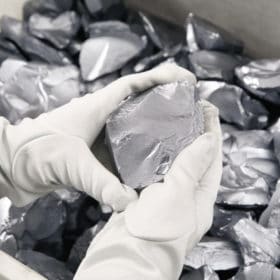
Has China extended solar grid-connection deadlines by a year?
Such a decision, which industry body the CPIA is adamant has already been announced, could make all the difference to investors struggling with a surge in equipment costs fueled by the polysilicon shortage. The all-important National Energy Administration, however, has yet to confirm whether the CPIA’s interpretation is correct.

Colombia launches second renewables auction
Projects not exceeding 5 MW in size will be entitled to participate in the procurement exercise. Selected developers will be granted a 15-year PPA and will have to start commercial operation on January 1, 2023.
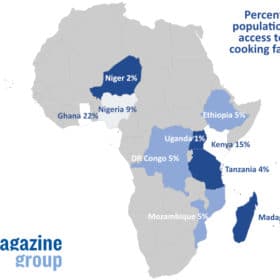
Niger joins the Scaling Solar club
The government wants 30% of its power from clean energy sources by 2035 and the 50 MW of solar targeted by the World Bank would make up two-thirds of that ambition.
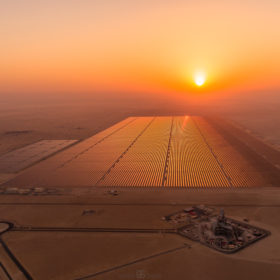
Phase V of Dubai solar park to take shape before Phase IV
Utility DEWA has announced the first 300 MW of the fifth phase of the Mohammed bin Rashid Al Maktoum Solar Park will be commissioned next month, with the first stage of the fourth phase due to arrive two months later.
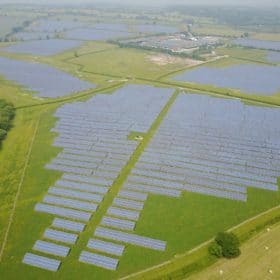
UK renewables developer Anesco changes hands
Private equity funds in Ireland and the U.S. have moved for the English company, which developed and sold the first subsidy-free solar farm in England, the 6 MW Clayhill project in Flitwick.
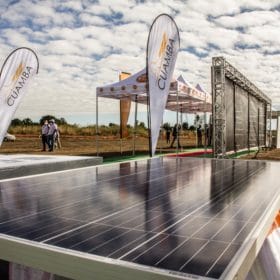
UK and Norwegian governments back solar-plus-storage in Mozambique
A solar array planned in the Tetereane district of Cuamba has been described by its developer as the nation’s first independent power project to feature utility scale storage.
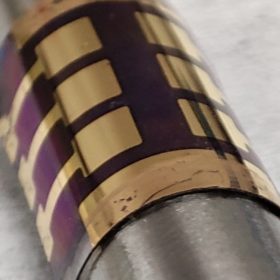
Flexible perovskite solar cell with 21.0% efficiency, high durability
International researchers have placed a low-dimensional metal-halide perovskite capping layer on top of a metal-halide perovskite film to provide hermetically sealed encapsulation and enhanced photocarrier properties. The cell has a short-circuit current density of 23.5 mA.cm2, an open-circuit voltage of 1.15 V, and a fill factor of 0.779.
