
France certifies first solar panels eligible for reduced 5.5% VAT
France’s Certisolis approved four Voltec Solar panels and one Meyer Burger module with carbon footprints under 530 kg CO₂/kWp, making them potentially eligible for the country’s 5.5% VAT rate.
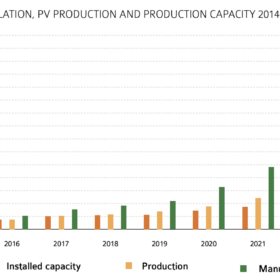
Thirty-five countries now operate GW-scale annual PV markets
The latest report from the International Energy Agency’s (IEA) Photovoltaic Power Systems Programme (PVPS) highlights that 2024 was another record year for solar installations but large overcapacities of solar cell, module and wafer manufacturing continued.

The impact of solar minigrids in rural Pakistan
A research team assessing the social embeddedness of solar minigrids in rural Pakistan found the technology responds to energy poverty while fostering empowerment in communities, leading the team to conclude a minigrid can foster broader societal change while providing a technological solution.
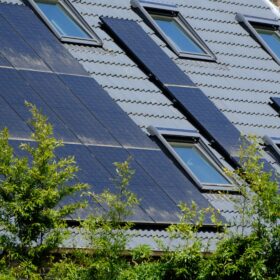
Ten reasons why behind-the-meter solar is a benefit
Behind-the-meter solar for homes, businesses, and communities comes with numerous benefits, said a paper from Stanford engineering professor Mark Jacobson.
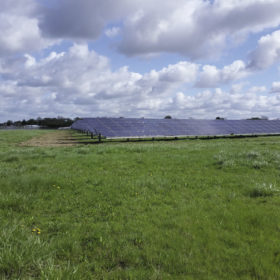
UK’s largest solar project approved, joins 2.1 GW cluster
Development consent granted for 1,400 hectare Tillbridge Solar Project. The 500 MW solar plant is the 17th energy project to secure final approval through the UK government’s nationally significant infrastructure project (NSIP) pipeline since July 2024 and the fourth in the local area.

Vietnam proposes financial support for residential solar, storage systems
Households in Vietnam could receive up to VND 3 million ($113.9) in investment capital for home solar-plus-storage systems installed for self-consumption, or a preferential loan of up to VND 40 million, under proposals from the country’s Ministry of Industry and Trade.

France to double grid tax on pre-2021 solar systems over 100 kW
France’s proposed 2026 budget would double the flat-rate grid tax for solar plants over 100 kW commissioned before 2021, drawing backlash from investors and PV industry groups.

Negative pricing reshapes solar finance as investors turn to storage for flexibility in Europe
Growing price volatility and the rise of negative pricing across power markets are pushing lenders and developers to rethink risk and revenue structures, focusing on asset flexibility and sustainable business models for storage, including co-location.
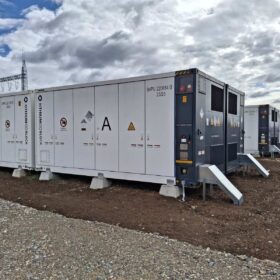
Renalfa switches on 260 MWh battery storage system in Bulgaria
The battery energy storage system is the first phase of a 315 MW/760 MWh system that is being developed alongside 238 MW of solar under Bulgaria’s largest hybrid power project to date, due for completion next year.

Cyprus to replace net metering with new self-consumption regime
Cyprus will replace its current net metering and billing schemes with a new, market-based self-consumption model from January 2026, as the island’s electricity sector opens to competition.
