Europe approves €3.2bn to support battery R&D
The European Commission has approved use of funds given by seven member states to back Europe-wide R&D projects across the lithium-ion battery value chain, with the aim of potentially unlocking an additional €5 billion in private sector investment.

Taiwanese government proposes solar tariffs of US$0.13-0.19/kWh
The draft feed-in tariff scheme should be approved by the end of the month. Payments for residential solar systems are expected to fall only 0.34% but those for utility scale solar may be reduced by 2.2%. An increase is set to be granted to projects in remote areas and also to those which rely on high-efficiency modules.

African Development Bank to lend almost €49 million for 208 MW of solar in Burkina Faso
The lender is providing the funds to support the West African country’s solar ambitions under the bank’s Desert to Power program. Several other European organizations have vowed to back the €137 million Yeleen solar project, which will encompass four sites.

Singyes set for name change
Now Chinese state-owned, the developer appears to want to draw a line under a traumatic two-year period which saw its fortunes reversed in dramatic fashion. Effectively now part of China’s Shuifa construction conglomerate, the proposed new name is intended to reflect the fact.

India seeks global bids for 1.2 GW of PV-wind projects, plus another 1.2 GW of PV
Solar Energy Corp. of India will sign 25-year power purchase agreements for the projects, which developers will be free to build, own and operate anywhere in India.
EU data protection rules could kill VPPs and other new business models
Ursula von der Leyen’s newly-appointed EU Commission is facing an early test of its credentials with the European Council caught in the crossfire over citizen data rights. The renewables industry voiced fears yesterday, at a digitalization conference in Berlin, that overstrict data protection rules could kill data-driven business models while the media is set to portray any perceived weakening of the legislation as evidence of EU lawmakers being in thrall to the Silicon Valley internet giants.
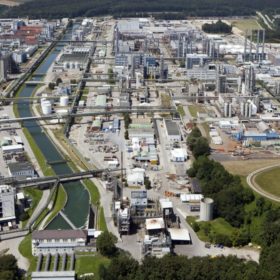
Poly-maker Wacker blames Chinese state subsidies for its latest €750m hit
The Munich-based group has reported a big impairment on its polysilicon production assets. The company cited the lack of a recovery in the PV project market, persistently low polysilicon prices and overcapacity in manufacturing, blaming state subsidies to Chinese rivals.
Cyprus installs largest rooftop PV under net billing program
The 2.5 MW array will operate under a payment system which guarantees grid operators will not be left out of pocket.
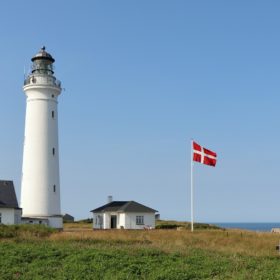
Danish renewables auction too successful at driving down public cost of clean energy
The Danish Energy Agency allocated 252 MW of clean energy generation capacity, of which 83 MW was solar and 93 MW solar-wind hybrid facilities which included 34.1 MW of PV capacity. The average price premium to be paid on top of wholesale electricity rates to the successful bidders has fallen 30% in a year, prompting the authorities to muse they may be allocating too much public money to support such projects.

South Sudan to get 20 MW/35 MWh solar-plus-storage plant
Egyptian manufacturer El Sewedy Electric has secured a contract from the authorities in Juba to build the $45 million project in Nesitu county. The African Export-Import Bank is financing the facility.
