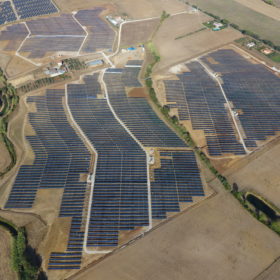
PV projects above 100 MW capacity proliferate in central Italy
Tuscia, in the Lazio region, is the focus of plans for several big solar parks including a 150 MW project approved by the regional government, two schemes exceeding 100 MW and six more projects ranging in size from 17 to 70 MW. Some 700 MW of solar is under development in the municipalities of Montalto di Castro and Tuscania alone.

Spain’s new rules for self-consumption come into force
The provisions allow self-consumption for communities and industrial areas; reduce administrative procedures – especially for small self-consumers; and establish a simplified mechanism for the compensation of self-produced excess energy.

EBRD to help Lebanon’s solar plus storage tenders
The nation has plans for two ambitious renewable energy tenders but the procurement process is dragging and Lebanese institutions lack experience in designing such schemes. A solution will be provided by Europe.
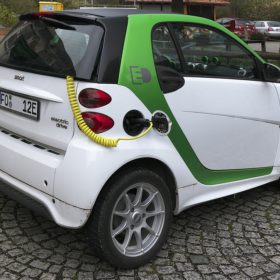
Italy offers incentives for EVs
A budget of €60 million has been allocated for this year, in 2020 and 2021 it will rise to €70 million. Applications for the incentives can be submitted from today.

Four takeaways from Solarex
All the fundamentals are in place for Turkey to be a leading light in solar but an all-too-familiar lack of policy certainty, coupled with a troubled macroeconomic backdrop, mean the nation is still unable to realize its PV potential.
Norway’s $1tn wealth fund to invest in unlisted renewables
The world’s largest sovereign wealth fund will invest in non-listed infrastructure, with the government stressing such commitments will not be a climate policy measure but an investment strategy. The fund had already announced an intent to gradually divest holdings in oil and gas companies and related projects.
Global surge to offset potential solar slowdown in China — IHS Markit
The global PV market will probably grow by as much as 25% in 2019, after sagging to a double-digit rate of expansion last year, with annual capacity additions likely to hit 129 GW, IHS Markit says in a new report.
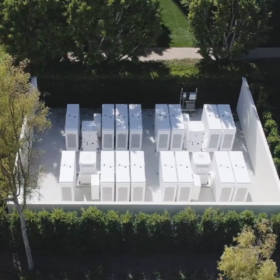
Energy storage races to investment-grade status
SUSI Partners has bought a 50% stake in Macquarie Capital’s 63 MW / 340 MWh distributed energy storage portfolio in Southern California. Included as part of this purchase is the world’s largest virtual power plant.

Financing key to scaling up SME rooftop solar in India — Deloitte
India’s Micro, Small and Medium Enterprises (MSME) sector is expected to make a significant contribution to the country’s rooftop PV target of 40 GW by 2022. However, a range of issues — including low public awareness, the scarcity of low-cost financing and the need for rooftop aggregation models — must be addressed before rooftop solar can be aggressively scaled up, according to a new report from Deloitte and the Climate Investment Funds (CIF).

Australian renewables investment to slump after 2020 on policy uncertainty — report
In a recent briefing on Australia’s renewables investment boom, BIS Oxford Economics estimates that solar and wind will attract AUD $20 billion ($14.2 billion) of private investment in fiscal 2018 and fiscal 2019, spread across more than 70 projects. But the consultants warn that investment will slow beyond 2020, pointing to the upcoming Australian federal election as critically important for the future of the country’s renewables pipeline.
