
Turbulent times for US energy storage
US President Donald Trump signed the One Big Beautiful Bill Act (OBBBA) on July 4, striking down key Inflation Reduction Act measures for energy storage and leaving the sector bracing for turbulence.
South African utility unveils renewable energy offtake program
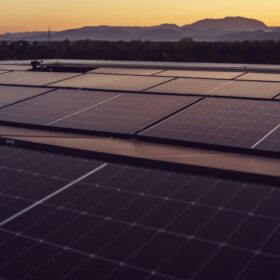
Eskom has launched a renewable energy offtake program in South Africa, opening a 291 MW solar tender for large consumers through power purchase agreements on utility-owned sites.

Portugal surpasses 6.1 GW of solar capacity
Portugal’s solar capacity reached 6.17 GW in May, according to the country’s renewable energy association. While distributed generation is steadily expanding, a quicker rate of deployment across all market segments will be needed to meet 2030 targets.

Brazil’s solar capacity reaches 60 GW
The latest report from the Brazilian Association of Photovoltaic Solar Energy (Absolar) says Brazil’s operational solar fleet consists of 42.1 GW from small and medium-sized systems and 17.9 GW from large-scale solar plants. Solar currently represents 23.5% of all installed capacity in the Brazilian electricity grid.
Solar can deliver growth, competitiveness, and resilience all over the world
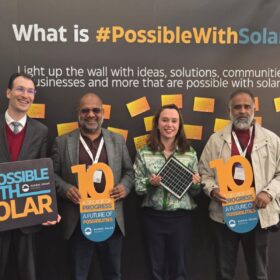
Solar is so scalable, so versatile, that every single country in the world, every single human on the planet from the frozen North to the deepest rainforests, from the dry, arid plains of the Atacama to the buzzing metropolises of New York, Paris, São Paulo, Shanghai and Tokyo can benefit from it.
Austria allocates €12 million for solar-plus-storage rebates
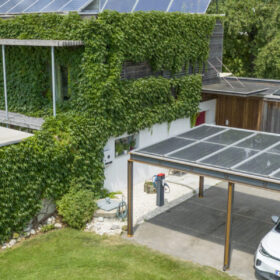
The Austrian government had budgeted €12 million ($14 million) for a second funding round but wants to finance successful applications and bring 220 MW new solar and 200 MWh of storage online.
USDA announces it will discontinue funding solar projects
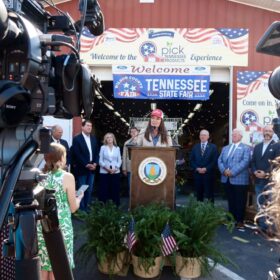
The U.S. Department of Agriculture has awarded billions in Rural Energy for America Program (REAP) grants for solar projects. Secretary Brook Rollins said the agency will no longer deploy funds to solar and wind projects.

German researchers develop recycling for dry-processed Li-ion batteries
Researchers at the University of Münster have developed a mechanical recycling process for production scrap from the dry processing of lithium-ion batteries. The method operates without solvents, preserves material properties, and allows the recycled cathode powder to be directly reused in electrode manufacturing.
Australia suspends Hello Solar registration over misleading responses
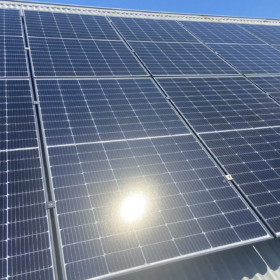
Australia’s Clean Energy Regulator (CER) has permanently suspended the registration of solar installation company Hello Solar, declaring it had provided misleading responses to requests for information.

Dominican Republic tenders up to 600 MW solar, wind with mandatory storage
The Dominican Republic has launched a tender for up to 600 MW of solar and wind capacity, requiring projects to include at least four hours of battery storage to support stability in the National Interconnected Electric System (SENI).
