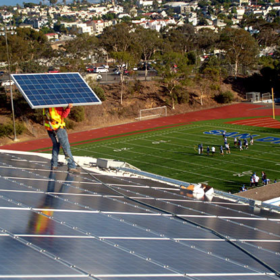
US energy firm AES commits to 70% carbon reduction in climate scenario report
The utility giant is preparing for a greener future with plans to cut carbon emissions, while integrating increasing levels of renewable generation and energy storage.

Canada’s Alberta raises budget for solar rebates
The Canadian province will provide an additional CA$7.5 million for projects run by municipalities, while offering more advantageous conditions for businesses and non-profits.
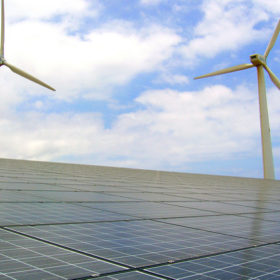
Spain wants 100% renewable electricity by 2050 as part of climate change strategy
The Law on Climatic Change being prepared by the Spanish government provides greenhouse gas emissions be reduced by 20% compared to 1990 levels in 2030, and that the electric system has 70% generation from renewable energy sources. By 2050, the targets will be raised to 90% and 100%, respectively.

IHS revises up outlook for Chinese solar to 40 GW after underestimating demand
Around 34.5 GW of PV was installed in China in the first three quarters – 1.5 GW more than expected by IHS analysts, who have raised their full-year guidance.
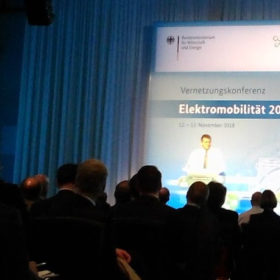
German government devotes €1bn to battery cell production
The Federal Ministry of Economics has published further details of possible battery cell production on a gigawatt scale. At the Networking Conference Electromobility 2018 in Berlin this week, Minister Peter Altmaier stressed the urgency of the project, for Germany and Europe to be independent of Asia and the US in storage technology.
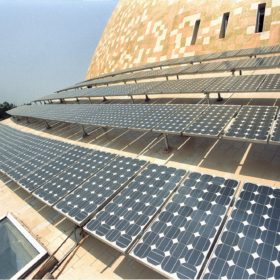
Extent of India’s new utility-scale solar has almost halved in six months
India added 1.2 GW of large-scale projects in the third quarter of 2018-19, taking new capacity in the first half to 1.9 GW. The numbers are down 43% and 44%, respectively, on the same periods of the previous year, according to Bridge to India’s quarterly India Solar Compass.
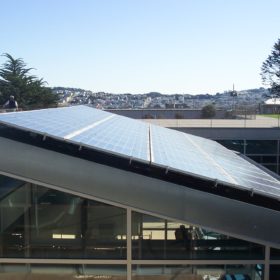
Dutch government sets up €100 million fund for PV in schools
The scheme would provide low interest loans to Dutch schools willing to go solar. Some 6,000 of the country’s 7,000 school buildings have yet to install an array.

Czech Republic may exclude PV from future renewables auctions
Once a leading European PV market, the Czech Republic may resume development of large-scale renewables from 2021. Only wind, hydro and biomass projects, however, will be eligible, under a proposal from the Ministry of Industry and Trade. Only rooftop solar, of up to 1 MW, would be backed by a ‘feed-in premium’ scheme.
PV to take lion’s share of $120 billion annual investment
The impressive growth is unlikely to replace coal-fired power generation as it will only be sufficient to cover the predicted increase in demand for electricity. The electrification of heating, manufacturing and transportation offer room for further development.
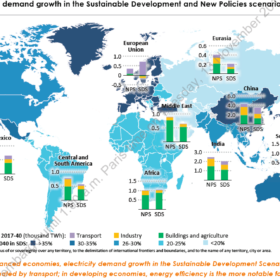
IEA World Energy Outlook: Solar PV capacity to overtake all but gas by 2040
Even in its low ball scenario, the International Energy Agency (IEA) imagines that installed solar PV capacity will overtake that of all other forms of energy apart from gas by 2040. Overall, it presents four scenarios in its 2018 World Energy Outlook, which show a changing energy landscape. While it finds that CO2 levels are, perversely, on the rise, and that many energy efforts in all but the most whimsical of its forecasts are far behind those needed to seriously address global warming, it still imagines coal, oil and gas playing a leading role in our energy mix going forward. It also sees “dramatic” transformation in the electricity sector. Long story short: Read something else if you want to take real climate action. We suggest The Drawdown.
