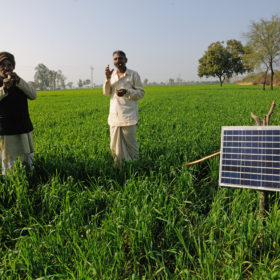
Rural India offers a $50bn opportunity for clean energy innovations
The farming sector alone offers a potential $40bn marketplace, thanks to rice transplanting, pesticide spraying and grain harvesting – says the Council on Energy, Environment and Water thinktank.

EVs could become key to renewables uptake and world’s largest source of battery storage
For renewables to claim a more sizable share of the global energy mix, the adoption of energy storage would need to pick up pace and the rapidly increasing size of the EV fleet will offer a scalable way to ramp up such access, says Fitch Solutions.
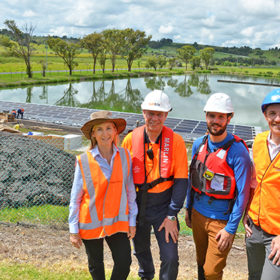
ARENA backs corporate PPA platform aiming to drive 5 GW of Australian renewables
An AUS$500,000 capital injection from the arms-length, state-funded renewable energy organisation takes to $800,000 the amount of public money which will be donated to a $1.74m project designed to make procuring clean energy easier for business and local authorities.

Dutch battery maker signs agreement for €1.6bn Chinese gigafactory
Lithium Werks has ambitious plans for a global chain of utility-scale production lines that has secured the backing of the Netherlands government and PM Mark Rutte, as EU leaders contemplate a post-US trade future.
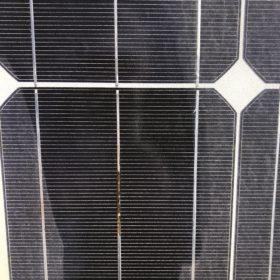
High-yield recycling of PV modules demonstrated by EU team
A project has demonstrated the numerous advantages of PV recycling and highlighted three techniques to turn panel waste into high-value materials.
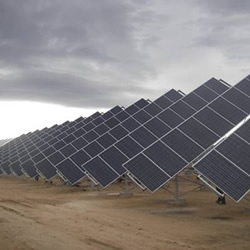
URE gets $90m financial backing from Taiwanese government
Taipei will invest in the company through its National Development Fund and government-run glass manufacturer Yao Hwa Glass Co. Ltd.

Daqo aims to slash polysilicon price as it forges ahead with production expansion
Deal negotiated with local electric utility for cheaper energy and a comprehensive modernization program will enable the poly maker to drive down production costs even more aggressively as it bids for market share in a swollen marketplace.

Tunisia postpones deadline for 70 MW solar tender, again
The country’s second 70 MW procurement – for solar projects up to 10 MW in size – was launched in May. The Tunisian government had already extended the deadline for the tender in August.

Decentralized solar-plus-storage would fire sub-Saharan Africa
According to a UC Berkeley study, the falling costs of storage technologies will make it possible for Sub-Saharan countries to rely on decentralized systems based mainly on solar-plus-storage, bringing access to electricity to more than 600 million people.
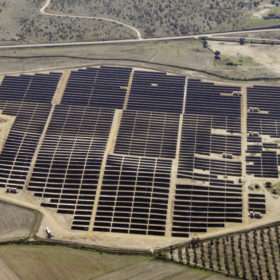
The weekend read: The MIP comes to an end
On August 21, the majority of EU member states rejected the request for the initiation of expiry reviews with regards to the antidumping and anti-subsidy measures for crystalline solar PV modules and cells originated in or consigned from the People’s Republic of China. As such, the undertaking on the minimum import price (MIP) expired on September 3, after almost five years in place. Here, Edurne Zoco, Research Director at IHS Markit looks at the changes this will likely bring to Europe’s PV market.
