
Philippines approves world’s largest solar project for grid connection
The Energy Regulatory Commission (ERC) of the Philippines has given the MTerra Solar Project permission to develop its own dedicated transmission facilities and connect to the Luzon grid. The first phase, encompassing 2.5 GW of solar and 3.3 MWh of battery storage, is due for completion in 2026.

German railway areas have 37.6 GW of solar potential
Fraunhofer Institute for Solar Energy Systems (ISE) says PV systems within 2 km of Germany’s railway substations could generate more than four times the network’s annual power demand.

New tech can tell if your EV will make it home
Researchers in California have created a new diagnostic metric that can reportedly predict if a battery can successfully power a specific task. The proposed model could be used in electric vehicles, unmanned aerial systems, and grid storage applications.
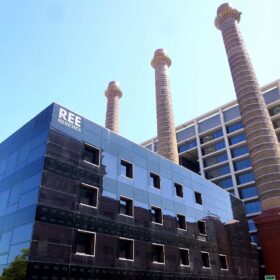
Spain’s grid operator warns of sudden voltage variations in the network
Red Eléctrica de España (REE) says sudden voltage variations in Spain’s grid are tied to renewable generation shifts, but there is no risk of blackout.
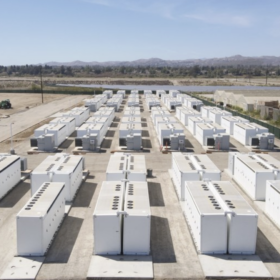
Operational faults cut returns in 19% of battery storage projects
A recent report from battery intelligence firm Accure reveals that while most battery energy storage systems (BESS) operate reliably, nearly 19% of projects experience reduced returns due to technical issues and unplanned downtime.

New research confirms rooftop PV affects urban temperatures, cooling demand
Using Lyon as a case study, an international research team has simulated the effects of rooftop photovoltaic (PV) coverage in an urban area at three levels: 25%, 60%, and 100%. The results have shown that solar panels can raise daytime temperatures by up to 0.72 °C, while cooling nighttime temperatures by up to 0.42 °C. In addition, daytime air conditioning demand has decreased by about 5%.
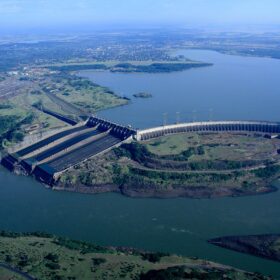
How to deliver large-scale grid infrastructure projects
New report from the Utilities for Net Zero Alliance addresses key challenges facing large-scale infrastructure projects and offers stakeholders recommendations for ensuring such projects are delivered within time and budget.

Voltage Energy releases two wiring solutions for PV projects
The US-based electrical balance of systems provider stated its new products are designed for utility-scale projects and the mid-capacity range. Both systems are IP68-tested.
Solar and wind integration crucial as Southeast Asia electricity demand grows
The International Energy Agency’s latest report says solar and wind energy are well placed to meet Southeast Asia’s growing electricity demand. It adds that while additional deployment will create flexibility challenges, most countries in the region can integrate more solar and wind energy without requiring major system changes.
Renewables overbuilding, proactive curtailment can reduce Europe’s energy system costs
New research from the Netherlands showed that renewables and short-term storage can meet around 92.5% of Europe’s electricity demand in future energy scenarios, with the remaining 7.5% being satisfied by green hydrogen. The scientists considered Europe as fully self-sufficient with zero import-export of power or hydrogen, with each of the 37 countries included in the modeling having a self-sufficiency rate of at least 80%.
