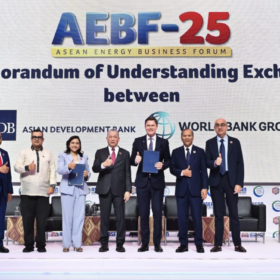
ADB, World Bank commit $12.5 billion to ASEAN Power Grid plan
The Asian Development Bank (ADB) and World Bank have launched a $12.5 billion initiative to finance regional power interconnection in Southeast Asia under the ASEAN Power Grid program.

Singapore approves 1 GW hydropower import project from Malaysia
Singapore has conditionally approved a 1 GW hydropower import project from Malaysia’s Sarawak state, with first deliveries expected around 2035.
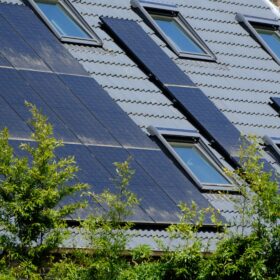
Ten reasons why behind-the-meter solar is a benefit
Behind-the-meter solar for homes, businesses, and communities comes with numerous benefits, said a paper from Stanford engineering professor Mark Jacobson.

Novar establishes own grid connection for solar park in the Netherlands
The Avermieden grid connection, which allows Novar to act as its own distribution system operator, will soon connect the first phase of a solar project set to become the largest solar park in the Netherlands.

Philippines approves world’s largest solar project for grid connection
The Energy Regulatory Commission (ERC) of the Philippines has given the MTerra Solar Project permission to develop its own dedicated transmission facilities and connect to the Luzon grid. The first phase, encompassing 2.5 GW of solar and 3.3 MWh of battery storage, is due for completion in 2026.

German railway areas have 37.6 GW of solar potential
Fraunhofer Institute for Solar Energy Systems (ISE) says PV systems within 2 km of Germany’s railway substations could generate more than four times the network’s annual power demand.
New tech can tell if your EV will make it home
Researchers in California have created a new diagnostic metric that can reportedly predict if a battery can successfully power a specific task. The proposed model could be used in electric vehicles, unmanned aerial systems, and grid storage applications.
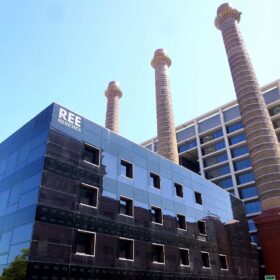
Spain’s grid operator warns of sudden voltage variations in the network
Red Eléctrica de España (REE) says sudden voltage variations in Spain’s grid are tied to renewable generation shifts, but there is no risk of blackout.
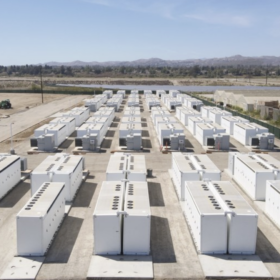
Operational faults cut returns in 19% of battery storage projects
A recent report from battery intelligence firm Accure reveals that while most battery energy storage systems (BESS) operate reliably, nearly 19% of projects experience reduced returns due to technical issues and unplanned downtime.

New research confirms rooftop PV affects urban temperatures, cooling demand
Using Lyon as a case study, an international research team has simulated the effects of rooftop photovoltaic (PV) coverage in an urban area at three levels: 25%, 60%, and 100%. The results have shown that solar panels can raise daytime temperatures by up to 0.72 °C, while cooling nighttime temperatures by up to 0.42 °C. In addition, daytime air conditioning demand has decreased by about 5%.
