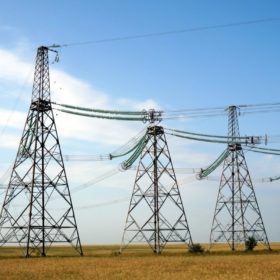
Australia’s AEMC rejects new rule for calculating transmission losses
The Australian network regulator has ignored pleas from some of the biggest solar and wind project owners in Australia to change the way marginal loss factors (MLFs) are calculated. While it has acknowledged that transmission has failed to keep pace with renewable energy investment, it did not offer any suggestions on what should be done to ameliorate the problem.
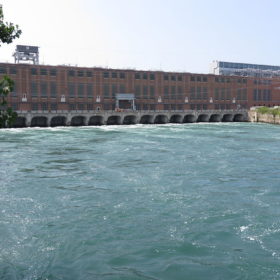
Quebec as a big battery for the northeastern US
Researchers at MIT say the immense hydropower resources of the Canadian province could be used as storage to even out the supply of intermittent renewables generation in New England and New York state.
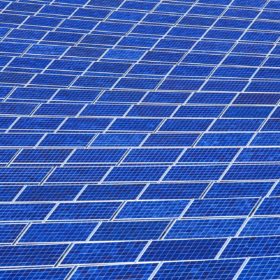
Dutch golf club to diversify with 147 MW solar park but will grid congestion bunker the plans?
PV project developer Solarfield is planning to build a plant under the SDE+ renewables incentives program. Construction is planned to start in 2021. The solar park will be in the province of Flevoland, one of the areas where grid congestion is jeopardizing the deployment of large scale solar.
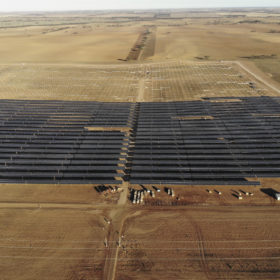
Australian state frees itself from federal shackles to unlock more grid capacity
The government of Victoria has decided to break from national electricity rules and introduce legislation to fast-track priority projects such as grid scale batteries and transmission upgrades, and make room for more large scale solar and wind. The announced reforms have prompted a flurry of reaction.

Italian car factory to add 15 MW of solar and 850 charging points
Carmaker Fiat Chrysler is bringing solar power to its Mirafiori manufacturing hub in Turin. A rooftop array will be installed by the auto giant with EDF-owned energy company Edison. French group Engie will install electric vehicle charging points in the car park.

Turkey introduces new provisions for energy storage
Rules published in the official journal provide certainty on how storage systems will have to be connected to the grid and who will take care of the process on behalf of governmental institutions. The regulations are expected to benefit rooftop PV and up-to-1 MW ‘unlicensed’ projects
Smart Energy Council rallies industry to halt decline of Australia’s renewables market
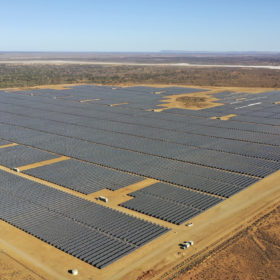
Renewable energy developers and investors have told Australian industry body the Smart Energy Council ‘they’re done. The sovereign risk in Australia is too great,’ according to the organization’s government relations manager, Wayne Smith. With prospects, employment and energy prices in jeopardy, the trade organization has vowed to petition policymakers for a bankable plan.

France installed 890 MW of solar in 2019
With cumulative capacity reaching 9.43 GW at the end of December, France saw electricity generation from solar increase 7.8% last year.
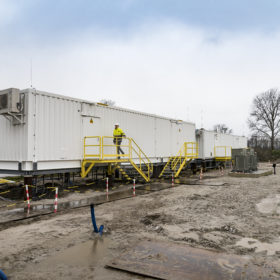
Netherlands to address renewables grid constraints with 1 GW of mobile substations
Dutch transmission system operator Enexis is deploying 11 “e-house” substations in the northern Netherlands, where grid capacity for large scale clean energy projects is limited. The company said it will invest €43 million in the plan “to speed up the energy transition”.

Dutch grid operator expects up to 34 GW of solar by 2030
Under Tennet’s most optimistic outlook, solar generation capacity could more than double the volume of wind farms by the end of the decade, provided the Netherlands goes above and beyond Paris Agreement climate change requirements.
