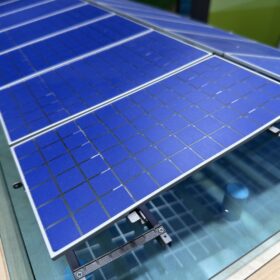
Nigeria plans 1.2 GW solar module assembly plant
Nigeria’s Rural Electrification Agency has entered into an agreement with Oando Clean Energy for a 1.2 GW project consisting of an off-grid power plant, mesh electricity generation, interconnected power grid and solar manufacturing power plant. A 600 MW line is scheduled to be rolled out next year.
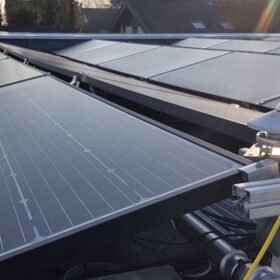
Fraunhofer ISE to assess PVT collectors, heat pumps on large-scale buildings
Fraunhofer ISE researchers, alongside partners from institutes in Stuttgart and Hameln, will monitor the performance of up to nine PVT systems on apartment buildings, businesses, offices and industry buildings over several years as part of a project building the case for wider deployment of the technology.
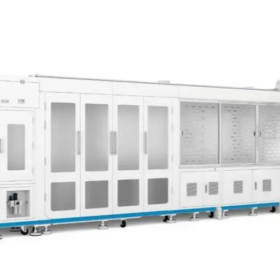
Autowell Technology unveils 0BB tool for multiple silicon PV module technologies
The equipment with a processing speed of up to 10,800 pcs/h can be used to upgrade existing super multi-busbar (SMBB) and multi-busbar (MBB) equipment made by China-based Wuxi Autowell Technology (ATW). It is suitable for tunnel oxide passivated contact (TOPCon), heterojunction (HJT), and back-contact (BC) cell technologies.
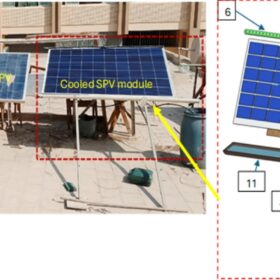
Experimental system cools PV panels while keeping them clean
Researchers had placed a cotton sheet on the back of a PV module, which was then made wet and cooled. On the front side, water was pumped water from a pipe in a way that kept the panel both cool and clean. Their experimental setup showed superior results compared to reference cooling technologies.
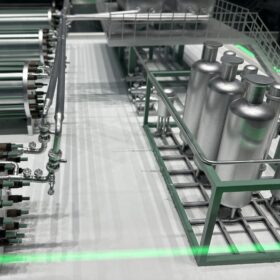
The Hydrogen Stream: Hyundai Motor plans fuel cell plant in South Korea
Hyundai Motor says it plans to build its first hydrogen fuel cell systems plant in South Korea by 2028, pending union consultations, expanding beyond its existing facility in China.

Water generates electrical charge 10 times stronger than expected
Electricity generated by water moving across a surface can be 10 times more powerful than previously thought, according to Australian researchers who say their finding could boost energy storage and charging rates and improve safety in fuel-holding systems.
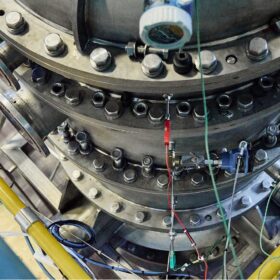
Startup shipping high purity silicon samples from pilot plasma reactor
Sweden’s Green14 is sampling material from its pilot reactor at KTH Royal Institute of Technology. The pilot has a 100 kW plasma capacity with 5 kg/h of silicon.

TCL launches propane heat pump for residential applications
The Chinese solar manufacturer entered the heat pump business with a new product that can reportedly provide hot water up to 75 C and achieve a coefficient of performance of up to 5.0. It uses propane as a refrigerant and has sound levels of 48 db(A) to 66 db(A).
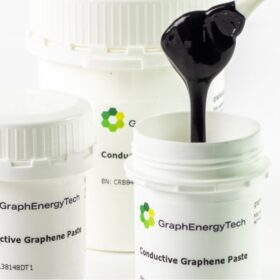
Replacing silver in PV manufacturing with new graphene electrode technology
Swiss-British university spinoff, GraphEnergyTech, is developing graphene electrode technology to replace silver and other metals traditionally used in solar cell manufacturing.

Enhancing PV glazing prospects in solar architecture
To make it easier to adopt building integrated PV (BIPV) as a glazing material, a group within the IEA Photovoltaic Power Systems Programme (IEA-PVPS) has tackled the solar heat gain coefficient (SHGC) calculation for BIPV. It is part of IEA PVPS Task 15 international standardization efforts.
