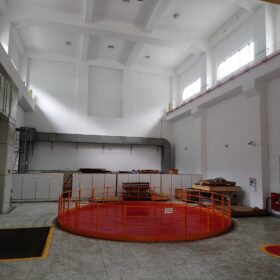
The use of AI in hydropower plants is creating new challenges
Hydropower has long been used to stabilize the rid and store energy to compensate for the fluctuations of solar and wind power. Its use of artificial intelligence is helping cope with new demands but making it more sensitive to cyber attacks.
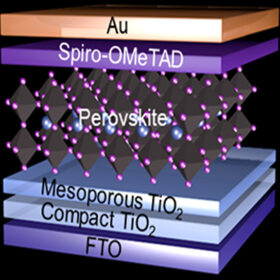
Moisture-resistant perovskite solar cell with 25.14% efficiency
An international research team has fabricated a perovskite solar cell using sulfur-based additives to improve its resistance to moisture. The device not only achieved high efficiency levels but was also able to retain about 96% of its efficiency after 1,000 h.

pv magazine Awards 2024 winners revealed
More than 300 entries from across 36 countries were received for the pv magazine Awards 2024, making this year’s program the most competitive yet. From modules and inverters to projects and storage, innovation was on display across the board.

The great grid transition in the age of data centers and EVs
Rapidly increasing energy consumption due to data centers, EVs and AI, requires adopting innovative energy strategies like distributed energy resources and microgrids that offer viable solutions for a more resilient, responsive energy infrastructure.
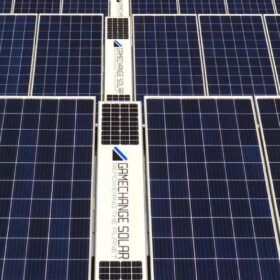
GameChange Solar releases solar tracker topography design tool
The new TopoSmart+ software enables users to find the most cost-effective topography and design plan to install the company’s Genius Tracker solar mounts at a given location.

Mercedes-Benz testing new solar paint
Mercedes-Benz said it is now evaluating a 20%-efficient, non-silicon photovoltaic coating that is significantly cheaper than conventional solar modules.
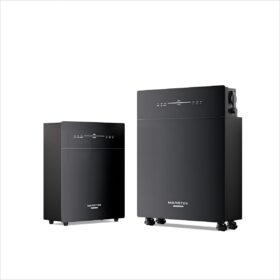
Marstek debuts AC coupled residential batteries
The Chinese manufacturer said its new products have a capacity of up to 5.1 kWh and are scalable up to 20.48 kWh. The systems feature a depth of discharge of 90% and can purportedly operate for more than 6,000 cycles.
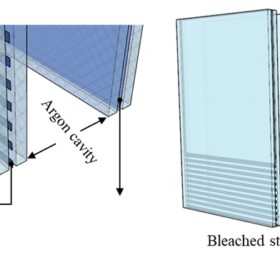
Chinese scientists develop photovoltaic window with heat flow control
The novel smart solar window combines photoelectric and electrochromic functions. It can produce electricity while also regulating the amount of solar radiation entering a building.

Panasonic offers residential heat pump solution that uses solar radiation forecasts
Panasonic has unveiled a new version of its Eco Cute CO2 heat pump that produces domestic hot water mostly during daytime based on solar radiation data. It integrates a dedicated app to obtain day-ahead solar forecasts and schedule water heating hours for the next day.
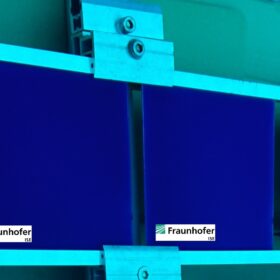
Fraunhofer ISE warns of risk from higher than expected UV-induced degradation in TOPCon, PERC, HJT cells
The researchers of the German institute explained that UV-induced degradation may cause larger than expected efficiency and voltage losses in all dominant cell technologies, including TOPCon devices. The scientists expect that silicon nitride layers could be used to enhance TOPCon UV stability compared to PECVD layers typically utilized in PERC and heterojunction cells.
