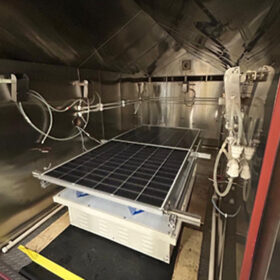
The impact of wind-induced vibrations on solar modules
Researchers from the UAE and Singapore have assessed how wind-induced vibrations increase mechanical stress in PV panels and have found these vibrations could lead to microcracks, more serious mechanical failures, misalignments, and ultimately to the system collapse.
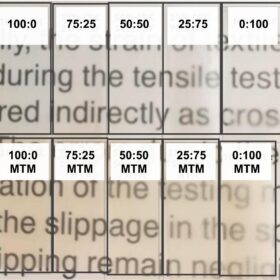
Researchers develop high transparency nanocellulose film for photovoltaics, packaging
The nanocellulose film can be used for light management as its light scattering is adjustable. It also exhibits a transmittance of over 80% at 550 nm.
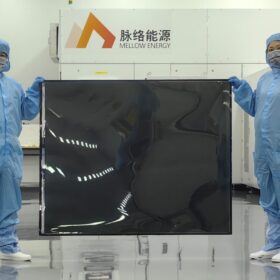
Chinese startup unveils flexible perovskite photovoltaic modules with 15.6% efficiency
Mellow Energy claims its ML-Flex panel is currently the world’s largest flexible perovskite solar module. Available in five versions with power output ranging from 260 W to 300 W, the module measures 1,200 mm x 1,600 mm and weighs only 2.04 kg.

Microvast reveals all-solid-state battery tech with operational voltage of 12-21 V
Microvast says its new True all-solid-state battery (ASSB) eliminates liquid electrolytes to achieve voltages of 12 V to 21 V, with a bipolar stacking design that cuts interconnections between cells, modules, and packs.
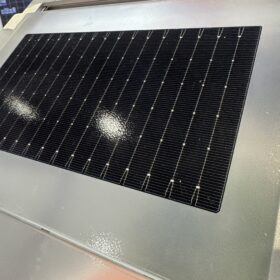
Daytime radiative cooling tech for solar panels
A Chinese research group has created a new radiative cooling technology for photovoltaic devices. It consists of a chamber made of ethylene-tetrafluoroethylene and polydimethylsiloxane that, when placed above the solar cells, can reportedly achieve an average cooling power of approximately 40 W/m2.
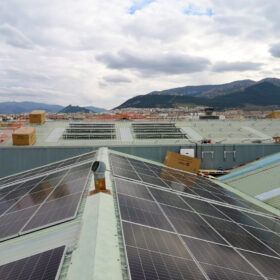
How to achieve higher power yield in east-west oriented solar arrays deployed on flat roofs
Researchers in Switzerland investigated different setups to maximize energy yields per area for PV Systems on flat roofs. Their work revealed that using horizontal single-axis tracking and reflectors could add up to 5% greater performance.

Carrier launches new air-to-water heat pumps for residential, commercial applications
Carrier, a US-based heating solutions provider, has introduced a new 4-14 kW line of heat pumps with a coefficient of performance of up to 4.90. The system use propane as the refrigerant and can reportedly reach leaving water temperature of 75 C.

Organic solar cells for space demonstrate radiation resistance, self-healing
Conventional silicon solar cells degrade rapidly in space, and gallium arsenide cells are heavy and inflexible. Research from the University of Michigan suggests carbon-based solar cells could be a good fit for space applications.

Firefighter injured in solar-plus-storage explosion and fire in Spain
The fire, which affected a photovoltaic installation in a container with batteries at the port of Gandia, started at 6:14 p.m. on January 4.
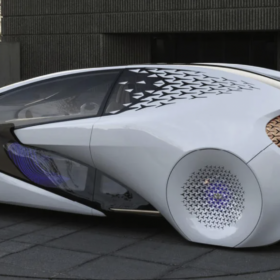
Japan keeps lead in solid-state battery development
While China, South Korea, Europe, and the United States are also engaged in active development of all solid-state batteries, Japan is leading the charge, offering generous subsidies to technology proponents.
